
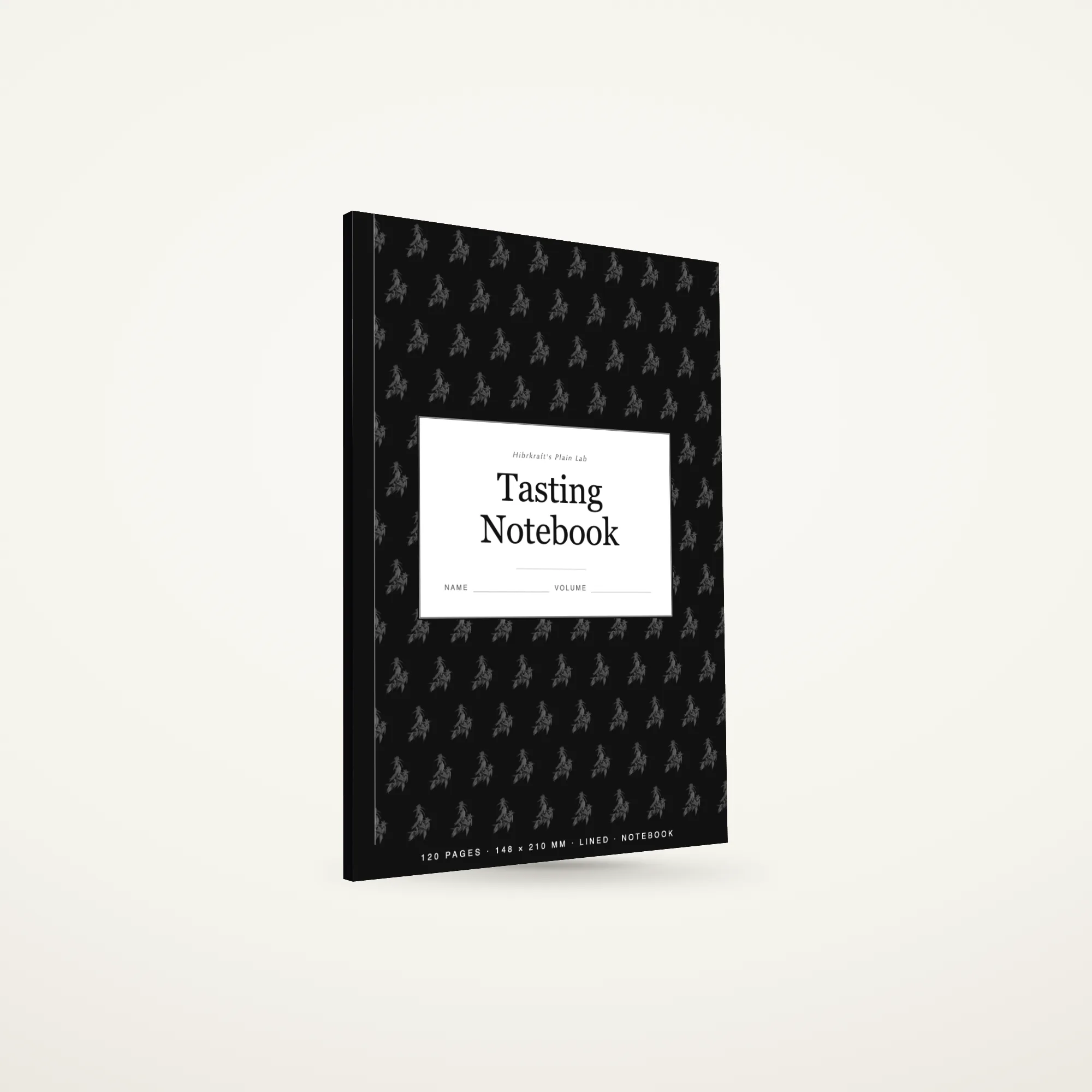
Plain Lab · notebook
Tasting Notebook
Eighty-four tasting pages ruled into appearance, aroma, palate and finish, with a score you set yourself, and twenty-six lined pages behind them for a recipe or a note a category won't hold.
Specification
- Trim
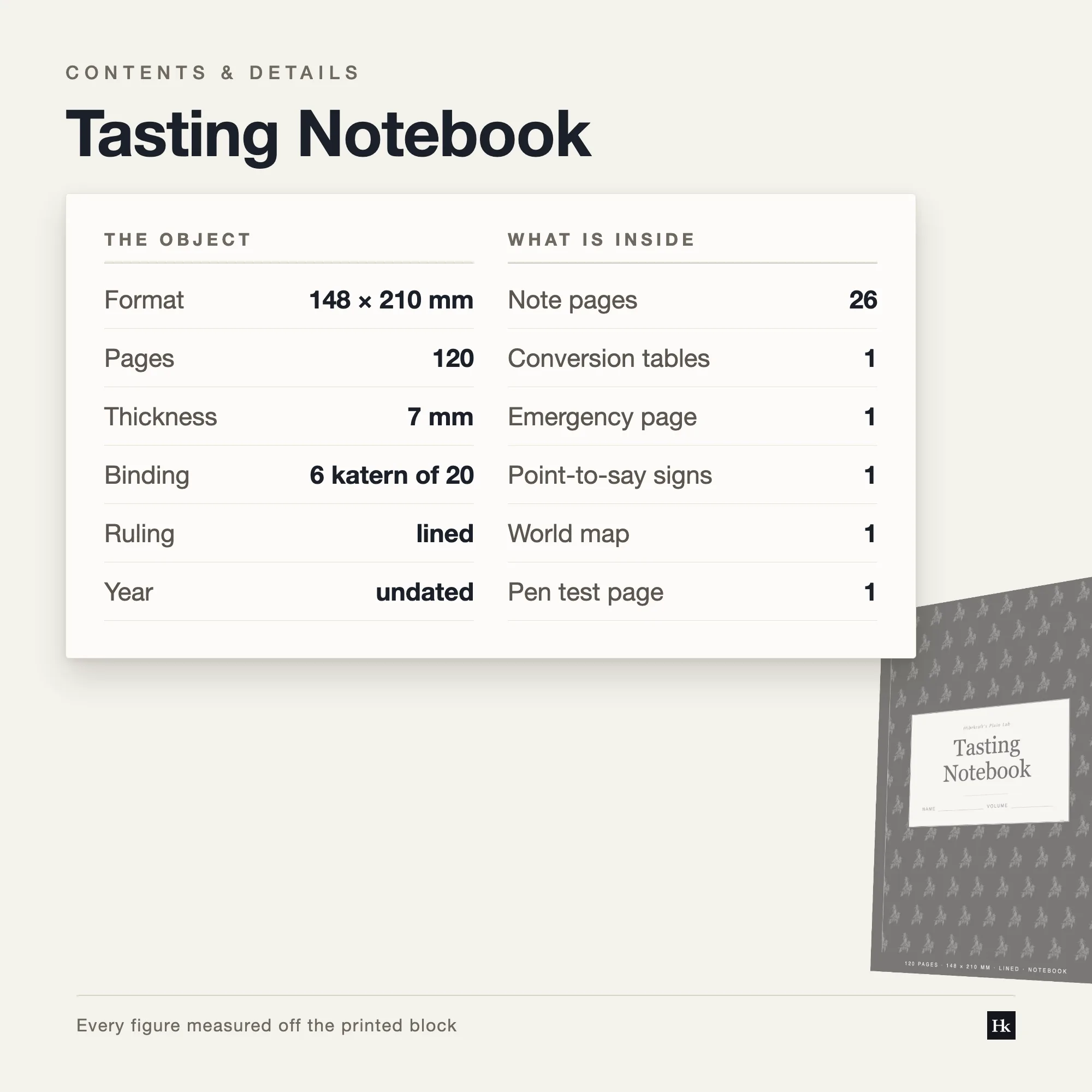
- 148 × 210 mm · 5.827 × 8.268 in
- Pages
- 120
- Leaves
- 60
- Sheets
- 30
- Signatures
- 6 × 20pp
- Spine
- 6.86 mm
- Paper
- white
- Ruling
- lined
- Ruling pitch
- 9.17 mm · 26.00 pt
- Rows per page
- 18
A tasting page is ruled into the same four stops most tasting runs through: appearance, aroma, palate, finish. Nothing after that is printed for you. There is a place to write a score. It is not a scale that says what a nine means against an eight, because that number is yours to define and defend, not the book's to hand you.
Behind the tasting pages sit twenty-six lined pages at 9.17 mm, plain, for whatever a four-part page can't hold: a recipe worth repeating, a supplier's name, a bottle you want to find again. The tasting run is the bulk of the book; the notes are what's left over from it.
The score is yours. The page just leaves room for it.
What is inside
- Tasting pages
- 84pp
- Appearance, aroma, palate and finish, with a score field left undefined.
- Notes
- 26pp
- Lined at 9.17 mm, for a recipe or a note the four categories can't hold.
- Reference
- 10pp
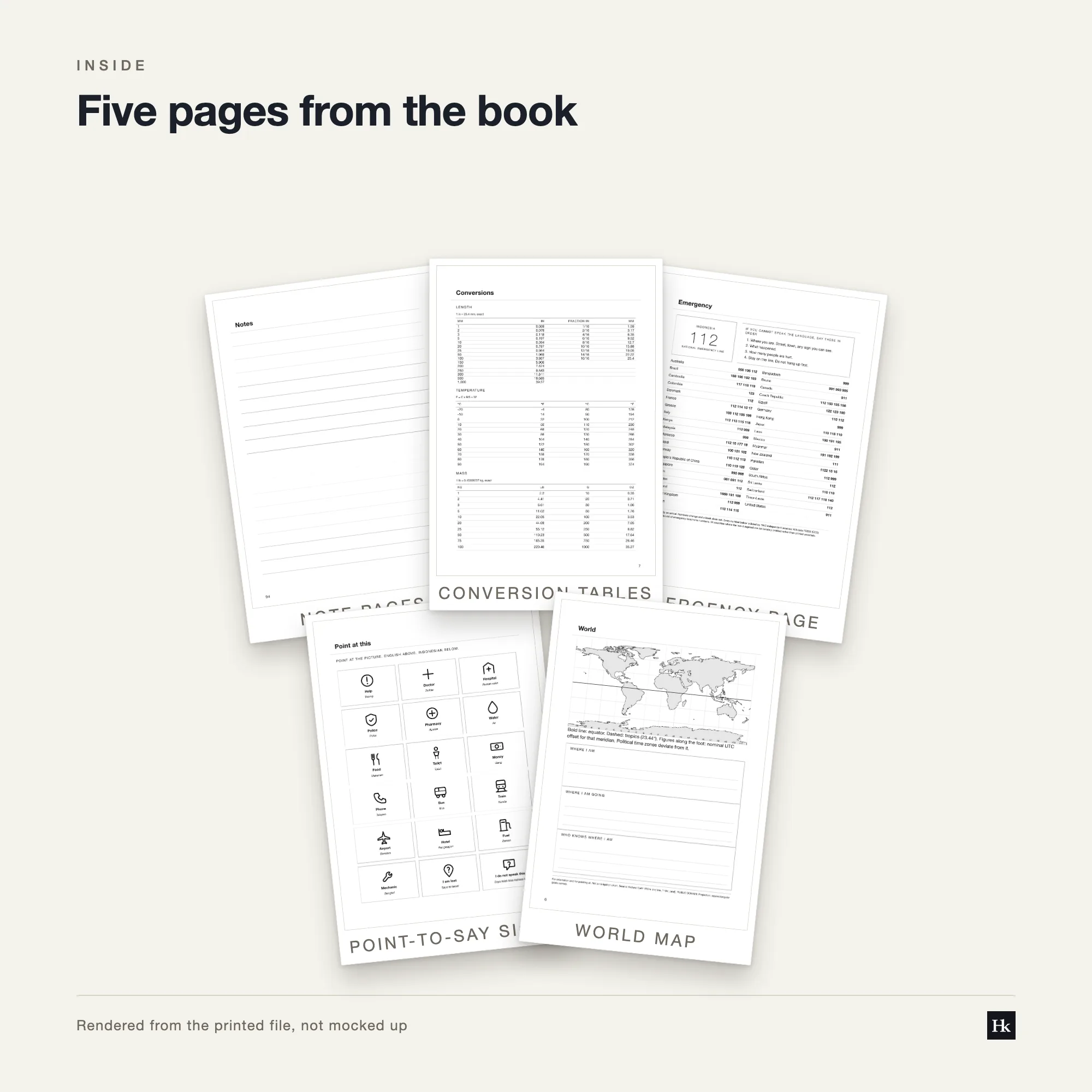
- Conversion tables computed from definitions and emergency numbers checked against two sources.
The film
Page by page
A vertical film from our own bench — this page contacts nobody's server to play it, and downloads nothing until you press play.
Real pages
Made at the Hibrkraft bindery, Bogor · about the maker
Books that sit alongside it
- Recipe NotebookAlso in Plain Lab
- Genko Yoshi NotebookAlso in Plain Lab
- Cross-Stitch Chart NotebookAlso in Plain Lab
- Tian Zi Ge NotebookAlso in Plain Lab
Questions
What four categories does a tasting page use?
Appearance, aroma, palate, finish.
Does it print a scoring scale?
No. There is a place to write a score, not a printed scale telling you what it means.
What are the notes pages for?
Plain lined pages at 9.17 mm, for a recipe, a supplier, or anything a four-part tasting page doesn't hold.
Is it specific to one drink or food?
No. The four categories work for wine, coffee, tea, or anything else worth tasting slowly.
Is it dated?
No.
A lump of white sugar was divided between all present, and tasted with the greatest curiosity.