
Plain Lab · notebook
Isometric Insert
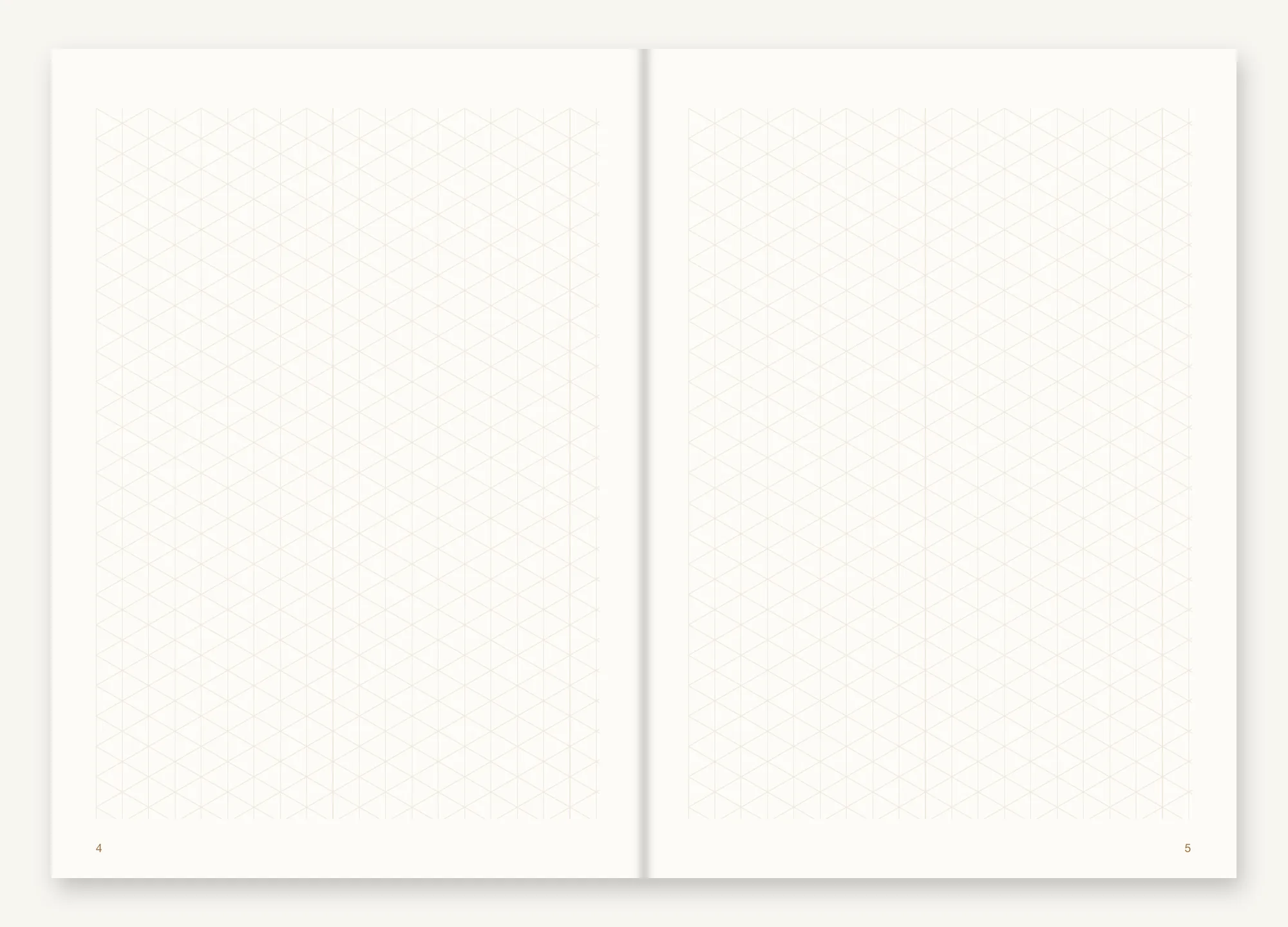
Three axes fixed at thirty, one hundred and fifty and ninety degrees, so a shape drawn on one line reads true from any of the three.
Specification
- Trim
- 127 × 177.8 mm · 5 × 7 in
- Pages
- 128
- Leaves
- 64
- Sheets
- 32
- Signatures
- 4 × 32pp
- Spine
- 7.32 mm
- Paper
- white
- Ruling
- isometric
- Ruling pitch
- 5.64 mm · 16.00 pt
- Rows per page
- 27
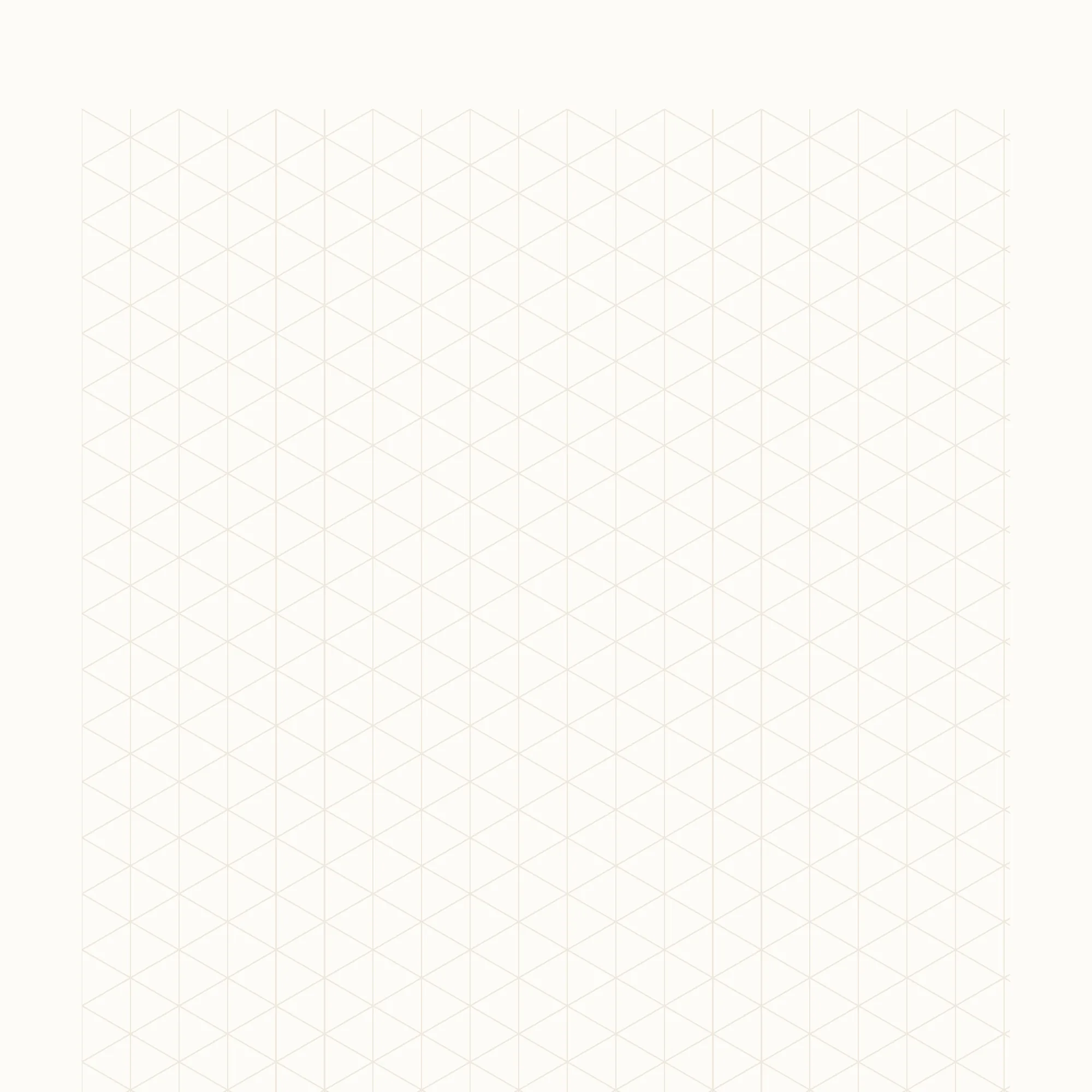
An isometric grid runs three families of lines instead of two: one at thirty degrees, one at a hundred and fifty, and a vertical at ninety. Drawn correctly, the three meet at the same points, so a line following any one of them sits exactly where the other two expect it to. Drawn even slightly wrong, the grid still looks fine on the page and only shows its fault once something is built along it that will not close.
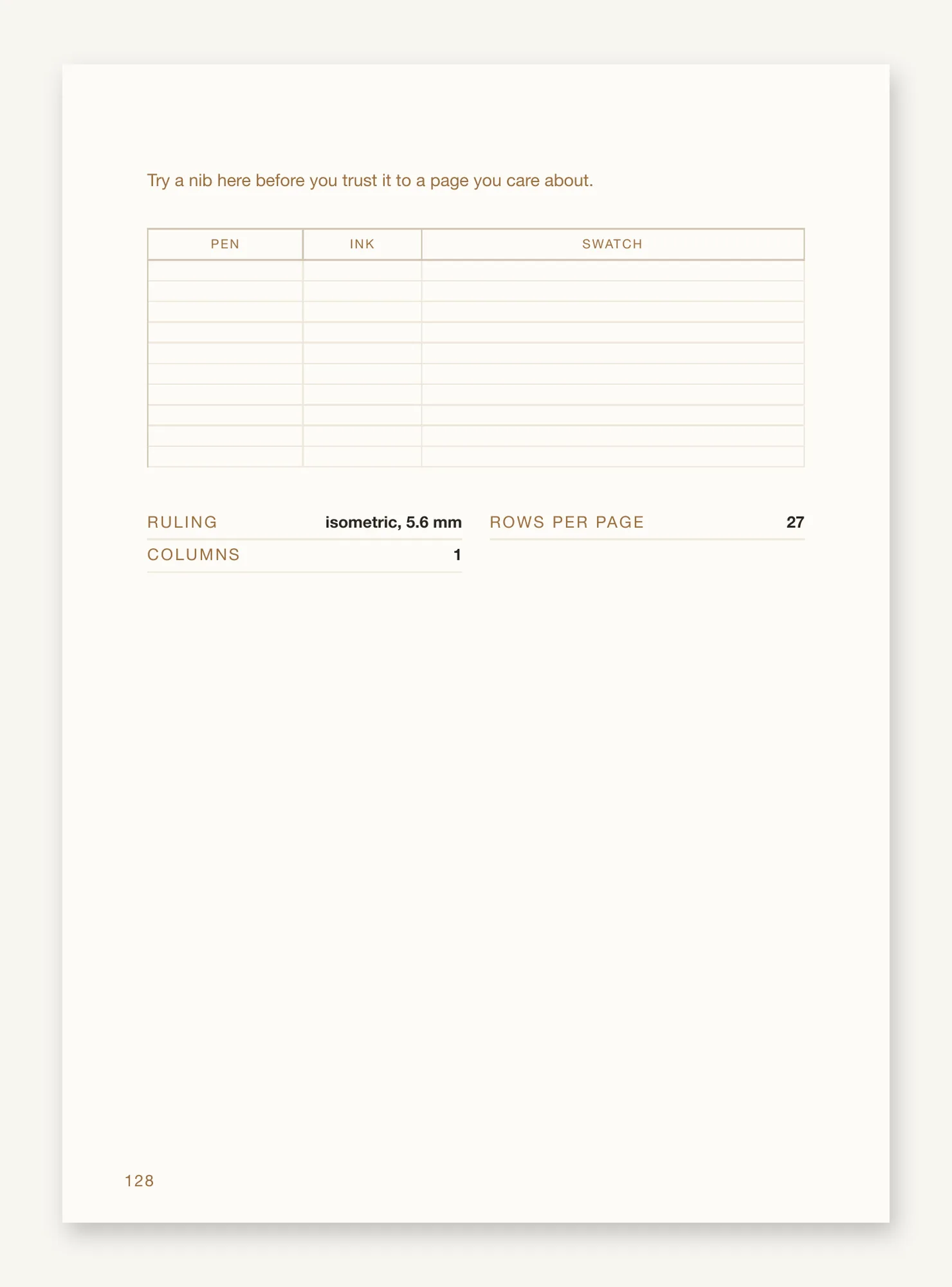
Twenty-seven rows of this grid fit the page at 5.64 millimetre pitch. A5, the larger trim, holds thirty of the same grid instead. The angles do not change with the trim; only how much of the grid fits on the smaller sheet does.
A cube drawn on this grid looks right from the front, the side and the top at once, which is the reason to use isometric over a straight perspective drawing by hand. I have drawn a box that looked perfectly square on the page and did not close when I tried to fold the same shape from paper. One of the three angles had drifted without my noticing while I drew it. The grid does not forgive that kind of drift. It just makes it easier to see.
What is inside
- Notes
- 125pp
- Three-axis isometric grid at thirty, one hundred and fifty and ninety degrees, twenty-seven rows to the page.
The film
Page by page
A vertical film from our own bench — this page contacts nobody's server to play it, and downloads nothing until you press play.
Real pages
Made at the Hibrkraft bindery, Bogor · about the maker
Books that sit alongside it
- Isometric SketchbookSame ruling, other trimisometric at 5.64 mm: 30 lines at a5 against 27 at 5x7
Questions
What angles make up the grid?
Thirty degrees, one hundred and fifty degrees, and a vertical at ninety.
What is the pitch?
5.64 millimetres, twenty-seven rows to the page, against thirty on the A5 edition of the same grid.
What is isometric drawing used for?
Representing a three-dimensional object, a box, a room, a machine part, on a flat page without a vanishing point.
Does it come with a cover?
No. It is the sewn block, sized for a leather cover made separately.
Is it dated?
No.
A shadow is always affected by the colour of the surface on which it is cast.