
Plain Lab · notebook
Cornell Insert
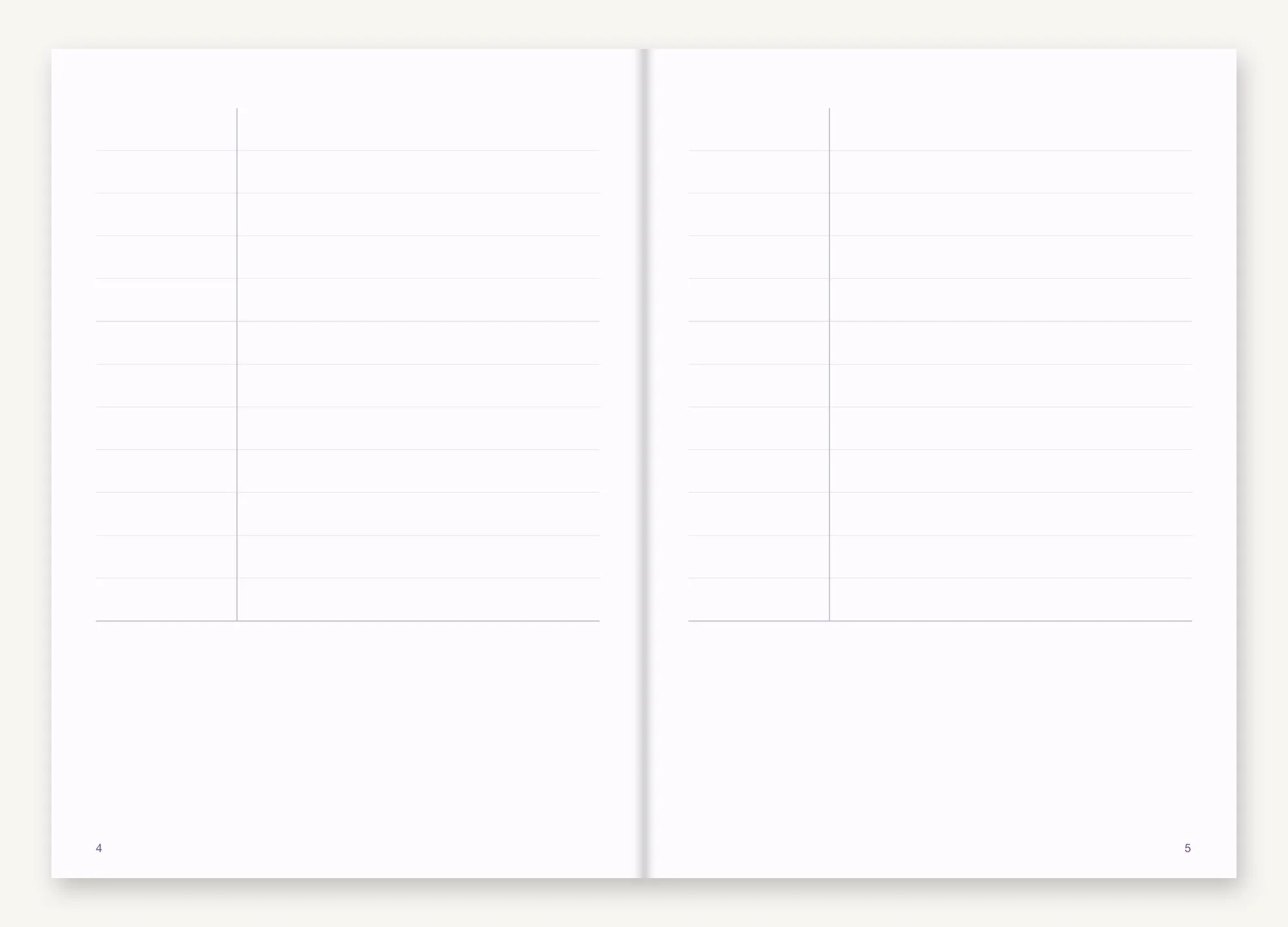
The Cornell layout, cue column, note area and summary strip, printed at sixteen ruled lines to the page.
Specification
- Trim
- 127 × 177.8 mm · 5 × 7 in
- Pages
- 128
- Leaves
- 64
- Sheets
- 32
- Signatures
- 4 × 32pp
- Spine
- 7.32 mm
- Paper
- white
- Ruling
- cornell
- Ruling pitch
- 9.17 mm · 26.00 pt
- Rows per page
- 16
Cornell's layout divides the page into three parts. A cue column runs down the left for the question or the keyword. A wide note area holds what is actually said, and a summary strip along the foot holds what the page added up to once it was full.
None of that changes because the sheet is smaller. What changes is the line count: sixteen ruled lines fit the note area at this trim, against eighteen on the A5 sibling of the same layout. The cue column earns nothing filled in during the lecture. It works filled in afterward, once you already know which three lines mattered and which twelve did not.
I filled mine in early for most of a term before anyone told me it runs the other way. A guess made in the moment reads exactly like a fact by exam week, and nothing on the page tells them apart. The summary strip at the bottom of each page is the shortest write of the three, and the one most often skipped. A page with a full note area and an empty summary strip is a page you copied down and never actually finished thinking about.
What is inside
- Cue, notes and summary
- 125pp
- Cue column, note area and a summary strip at the foot of every page, at sixteen lines to a 5x7 sheet against eighteen on the A5 edition.
The film
Page by page
A vertical film from our own bench — this page contacts nobody's server to play it, and downloads nothing until you press play.
Real pages

Made at the Hibrkraft bindery, Bogor · about the maker
Books that sit alongside it
- Sermon and Lecture NotesSame ruling, other trimcornell at 9.17 mm: 18 lines at a5 against 16 at 5x7
Questions
What are the three parts of a Cornell page?
A cue column on the left, a note area for the main text, and a summary strip across the foot.
How many lines are on a page?
Sixteen, ruled at 9.17 mm, two fewer than the A5 edition of this same ruling, because the sheet is smaller.
When should the cue column be filled in?
After the note area, not during it. Filled in early it is a guess; filled in after, it is a summary of what mattered.
Does it come with a cover?
No. It is the sewn block, sized for a leather cover made separately.
Is it dated?
No, and the layout does not assume one page per session either. Use as many or as few as a lecture needs.
All men are made one for another: either then teach them better, or bear with them.