
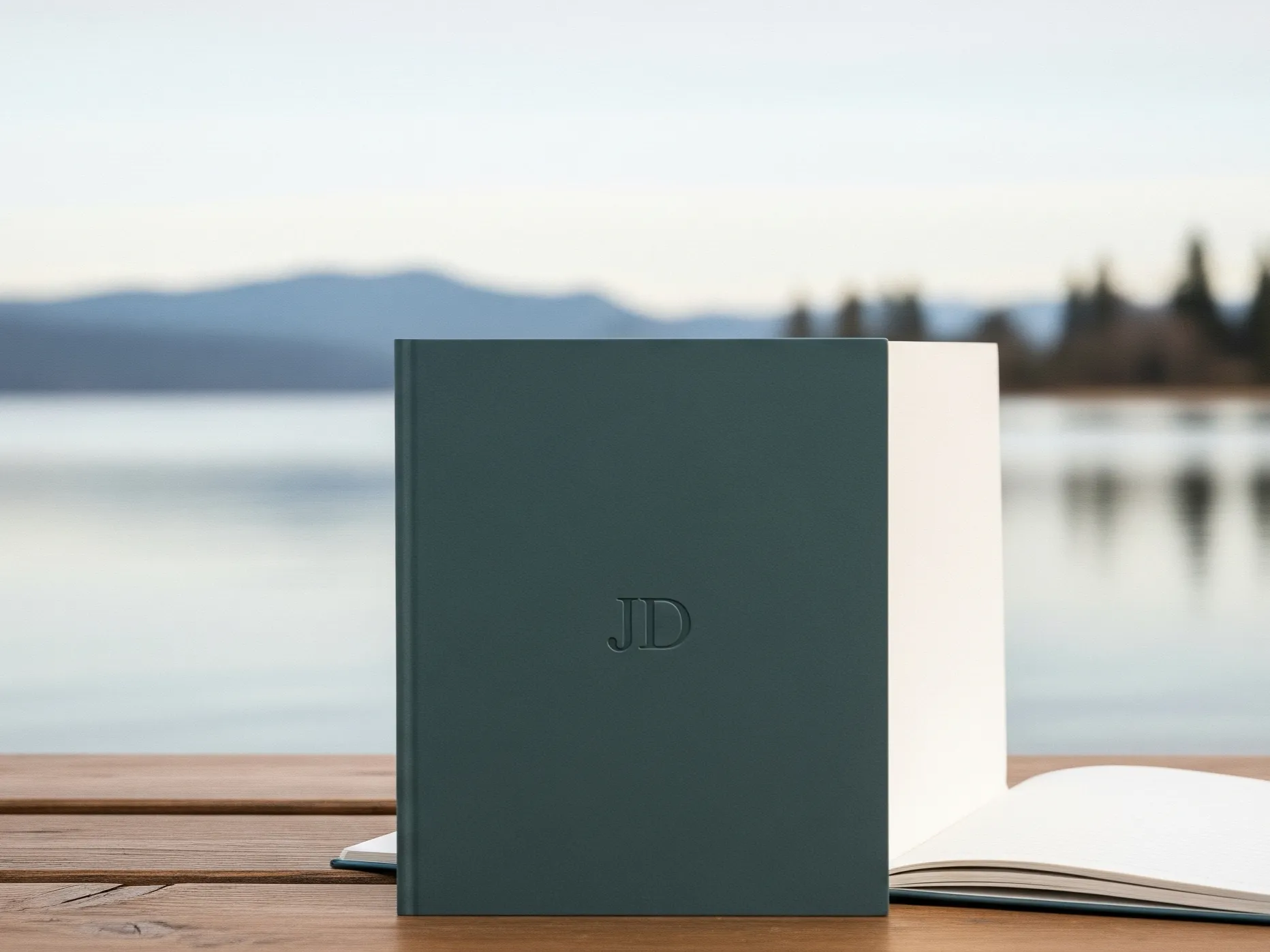
Monogram Notebook
by Hibrkraft · August 2, 2025
In a fast-moving world filled with mass-produced goods, a personal touch becomes a luxury. A monogram notebook captures that essence perfectly. It is not merely a book with a set of initials on it, but a canvas for identity, a mark of heritage, and a gift that speaks more deeply than words. From an executive’s desk to the pages of a private journal, a monogram turns a notebook from an ordinary object into a precious personal artefact. It is a bridge between a craft tradition centuries old and the modern need for self-expression that is unique and full of meaning.
A monogram is about more than aesthetics. It is the short form of a story, a visual signature standing for an individual, a couple, a family or even a brand. On the cover of a leather notebook a monogram is not merely printed but often pressed or carved into the material, creating an interplay of texture and light that adds depth of character. That is what makes a monogram notebook so sought after: it offers intimacy and permanence in even the simplest detail.
A Trace of History: From Ancient Coins to the Modern Desk
The Origin and Meaning of a Mark
The term “monogram” comes from the Greek: “mono”, meaning single, and “gramma”, meaning letter. Literally, it is a single letter or mark. In time, however, the monogram evolved into an artistic motif combining several letters or initials. The earliest use of monograms can be traced back to ancient Greek and Roman civilisation, around the 6th century BC. Rulers of the period placed monograms, often their own initials, on coins to validate the currency and mark their power over a territory. The mark served as a seal of authenticity and a symbol of authority recognisable across the realm.
By the Middle Ages, artists and craftsmen had adopted the practice to mark their own work. A painter, a sculptor or even a bookbinder would add a unique monogram as a signature, a claim to the quality and authenticity of the work. The mark became essential for identification and attribution, especially in art and craft. In early bookbinding, some binders went as far as using their monogram within a complex panel stamp to decorate an entire cover.
The Height of Its Popularity in the Victorian Era
The monogram’s popularity exploded in the Victorian era (1837-1901). In this period it became a symbol of status and prestige among the aristocracy and the growing middle class in Europe and America. Well-regarded families would put their monogram on almost everything they owned, from silver and table linen to stationery and clothing. Owning monogrammed things was taken as a sign of good taste and high social standing. Popular women’s magazines of the day even ran alphabet and monogram designs regularly for their readers to embroider, letting this kind of personalisation soak into everyday life.
This mania, which one writer of the day called an “epidemic,” made the monogram an inseparable part of social etiquette. For a woman, the monogram on her belongings might use her maiden initials, while for a couple it would combine their initials as a symbol of union. It is this tradition that laid the foundation for many of the monogram etiquette rules still in use today.
A monogram is not merely an ornament. It is a timeless signature, turning an ordinary notebook into a personal legacy.
The Technique and Skill Behind a Leather Monogram
Applying a monogram to a leather notebook is not an ordinary printing job. It takes particular skill and the right technique to produce detail that is sharp, elegant and durable. The two main techniques most often used in leather craft and bookbinding are debossing and hot foil stamping.
Debossing, also often called blind deboss, is the process of pressing a heated metal stamp (called a die, or a cliché) into the surface of the leather. That pressure creates an indentation, a recessed effect following the monogram design, with no ink or foil involved. The result is a personalisation that is very subtle, elegant, and at one with the natural texture of the leather. The three-dimensional effect it produces reads as luxurious and minimal, its beauty lying in the shadow and detail created by the pressure itself. The technique is highly valued because it will not fade or peel; it becomes a permanent part of the leather itself.
Hot Foil Stamping, on the other hand, gives a result that stands out and catches the light. The process is similar to debossing, but it involves a thin sheet of coloured foil (gold, silver or rose gold, for instance) laid between the hot stamp and the surface of the leather. Heat and pressure from the stamp transfer the foil onto the leather, following the shape of the monogram design. The technique creates a beautiful contrast between the metallic shine of the foil and the matte or semi-gloss colour of the leather. Foil stamping gives a classic touch of luxury and is often the choice for business planners, wedding gifts, or pieces meant to make a strong statement.
Both techniques demand high precision. The temperature of the stamp, the pressure applied and how long it is held must all be set carefully to suit the type of leather in use if the result is to be perfect. A small mistake can damage the surface of the leather permanently, which is why monogramming on quality leather goods always passes through skilled hands.
The Monogram in the Modern Era: More Than Just Initials
In a digital age, where identity is so often virtual, a monogram on a physical object such as a leather notebook offers a connection that is real and personal. It is a reassertion of ownership and individuality. Giving a gift personalised with a monogram shows attention and extra effort, turning that gift from a mere object into a precious memory with high sentimental value. It is a way of saying “I was thinking of you specifically” in an elegant language of design.
Understanding Monogram Etiquette and Style
Although a monogram looks simple, there are conventions of etiquette and style, grown out of tradition, that guide how it is set out. Understanding them can help you choose the design that suits you best.
- The individual monogram: For one person there are two common formats. The first is a straight sequence: the initials of the first, middle and last name, all at the same size (for instance, ‘JMS’ for Jennifer Michelle Stewart). The second and more traditional format puts the last-name initial in the centre at a larger size, flanked by the first-name initial on the left and the middle-name initial on the right (for instance, ‘jSm’ for Jennifer Stewart Michelle).
- The couple’s monogram: For a married couple sharing a last name, the monogram usually places the shared last-name initial in the centre at a larger size. The woman’s first initial goes on the left and the man’s first initial on the right (for instance, ‘bHc’ for Brittany and Cory Horton). For modern couples who choose not to share a last name, or who want to mark a union before marriage, a two-letter monogram (a cypher) combining the first initial of each name is often a beautiful choice.
- A single initial: Sometimes one letter is enough. It can stand for the first name, for a more casual touch, or for the last name, for a more formal and bolder statement.
In the end these rules are guides, not rigid law. The monogram you choose should be whatever feels most meaningful and best represents you, or the person receiving the gift.
The Difference Between a Monogram, Initials and a Cypher
In personalisation design these terms are often used interchangeably, though in fact there is a slight difference of nuance between them.
- Initials: This is the most basic form, where the letters of a name simply sit side by side with no overlap and no artistic interaction. Example: J.S.B.
- Cypher: A cypher is an artistic arrangement of several initials. The letters may touch one another, overlap in part, or be set in a decorative non-linear format, but each letter can still be read on its own.
- Monogram: This is the most integrated form. In a true monogram the initials are interwoven, stacked or combined in such a way that they form a single unified motif or symbol. Often one letter shares a line or a shape with another.
Understanding the difference helps in appreciating the level of complexity and artistry behind each design.
When to Choose a Monogram Notebook?
A monogrammed notebook is a very fitting choice on a range of occasions. It adds significant value, both in usefulness and in feeling.
- As a personal gift: For a birthday, a graduation or the celebration of a personal achievement, a leather journal carrying the recipient’s monogram is a deeply personal and thoughtful gift. It shows that you took the time to create something unique for them alone.
- For professional use: A monogrammed planner or work notebook gives an impression of professionalism and attention to detail. It is a quiet way of showing your personal brand identity in every meeting. For a company, giving a monogrammed planner to clients or staff is a classy and useful form of recognition.
- Wedding or anniversary gifts: A monogram combining a couple’s initials is a beautiful way to celebrate the union of two people. A set of journals carrying the couple’s monogram can become the place where they write down their memories and their plans for a future together.
- For yourself: Ordering a monogram notebook for yourself is a form of self-regard. It is a way of raising the everyday experience of noting down ideas, plans or private reflections in a book that feels genuinely your own.
At Hibrkraft we understand the power of that personal touch. It is why we offer a monogramming service on our leather journals, letting you choose the font, the foil colour and the placement to create a notebook that is not only useful but a true reflection of your identity. Every monogram is worked by hand, making sure each detail is perfect and able to last as time goes on, just like the stories you will write inside it.
FAQ
What is the difference between a monogram and ordinary name printing?
A monogram is an artistic design combining one to three initials, often interwoven or overlapping into a single motif. Ordinary name printing simply sets out the full name in a line. A monogram offers a more classic, elegant and symbolic aesthetic, while name printing is more direct and informative. The techniques used for a monogram (debossing or foil stamping, for instance) also give a texture that ordinary printing does not have.
What is the correct order of initials for a monogram?
Traditional etiquette has a few rules. For an individual with three initials, the most common format is first name, last name (larger, in the centre), middle name (example: John Fitzgerald Kennedy becomes ‘jKf’). For a married couple the format is the woman’s first initial, the shared family initial (larger, in the centre), the man’s first initial (example: Claire and Daryl Johnson become ‘cJD’). Modern practice is more flexible, though, and what matters most is choosing the format you like.
Can a monogram on leather fade or be damaged?
It depends on the technique. A monogram made by debossing (without foil) is permanent in essence. It presses the design into the leather, so it will not fade or peel. A monogram in hot foil stamping is very durable, but with very heavy use and constant rubbing over the years the foil layer can thin. To look after it, avoid scrubbing the monogram area with harsh chemical cleaners, and keep the book somewhere it is not constantly rubbing against sharp objects.
Which fonts are available for a monogram at Hibrkraft?
Hibrkraft keeps a range of classic and modern fonts drawn specifically for monogram work. We usually offer Serif fonts (Times New Roman or Garamond, for instance) for a classic and lasting look, and Sans-serif fonts (Helvetica or Futura, for instance) for a cleaner, more modern aesthetic. You can see the options available when placing a custom order, or consult our team directly for the best recommendation to suit the style you have in mind.
References
- Lakeshore Magazine. “A Brief History of Monograms.” (the original link is dead; the reference is kept without a link)
- Leontine Linens. “Monogram Etiquette.” (the original link is dead; the reference is kept without a link)
- Sasha Nicholas. “Monogram Etiquette | Customizable Gifts.” (the original link is dead; the reference is kept without a link)
- Mark and Graham. “Monogram History.” (the original link is dead; the reference is kept without a link)
- Ex Voto Vintage. “The History of the Monogram.” (the original link is dead; the reference is kept without a link)
- Leatherology. “Monogram Etiquette 101: The Basics.” (the original link is dead; the reference is kept without a link)
- GiftsIn24. “Monogram Magic: Monogramania Hits Fever Pitch in the Victorian Age.” (the original link is dead; the reference is kept without a link)
- Fine Books & Collections. “A 17th-Century Monogrammed Binding Reveals Its Secrets.” (the original link is dead; the reference is kept without a link)
- Maxipro. “Mengenal apa Itu Hotprint : Perbedaan Emboss & Deboss.”
- Lautan Display. “Apa Itu Deboss dan Perbedaannya dengan Emboss?”

Custom Monogram Notebook
Monogram your initials on a leather journal of your choice. A small detail that tells a big story about who you are.
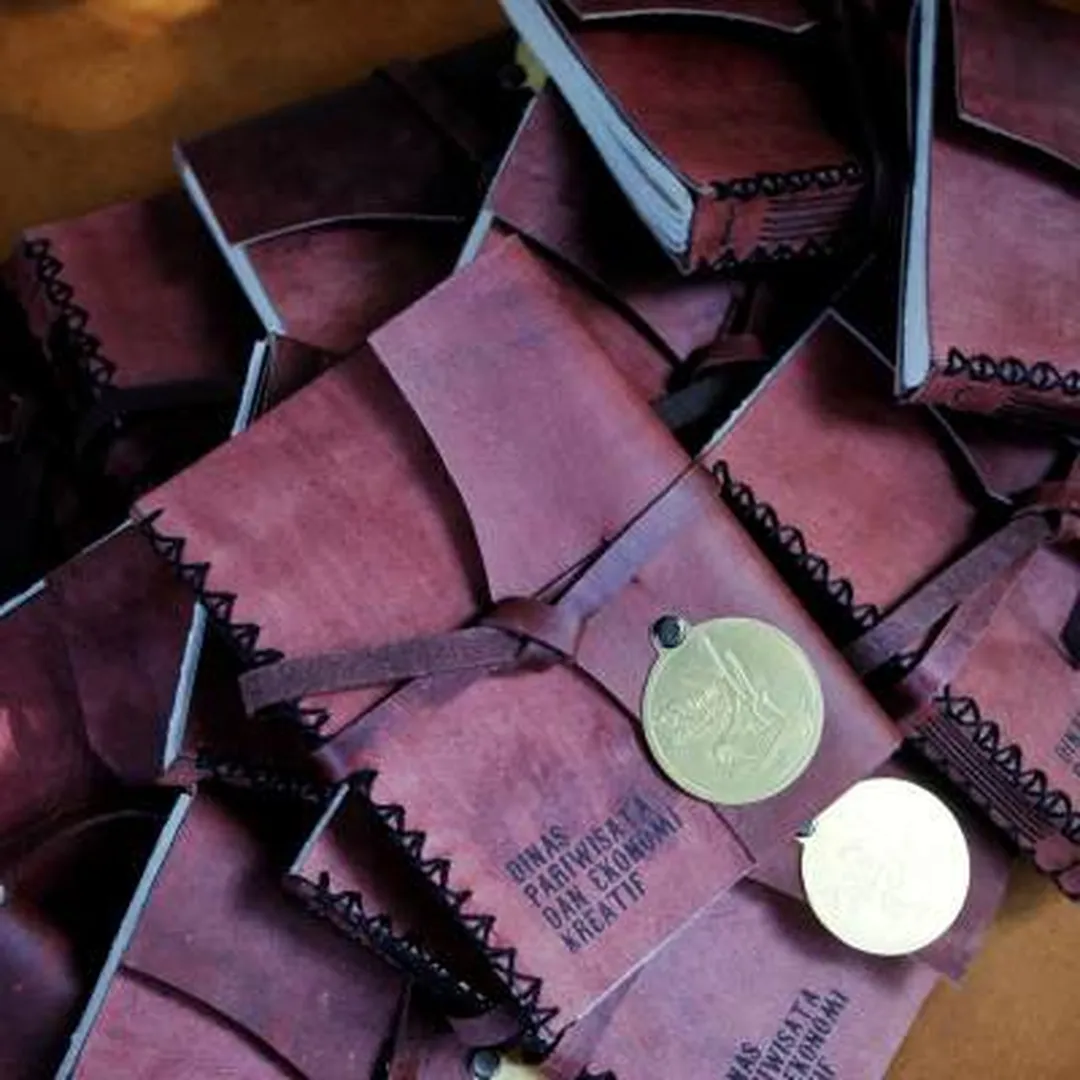
Business & Whitelabel
Strengthen your brand identity with an exclusive monogrammed planner. A classy symbol of professionalism for clients and teams.
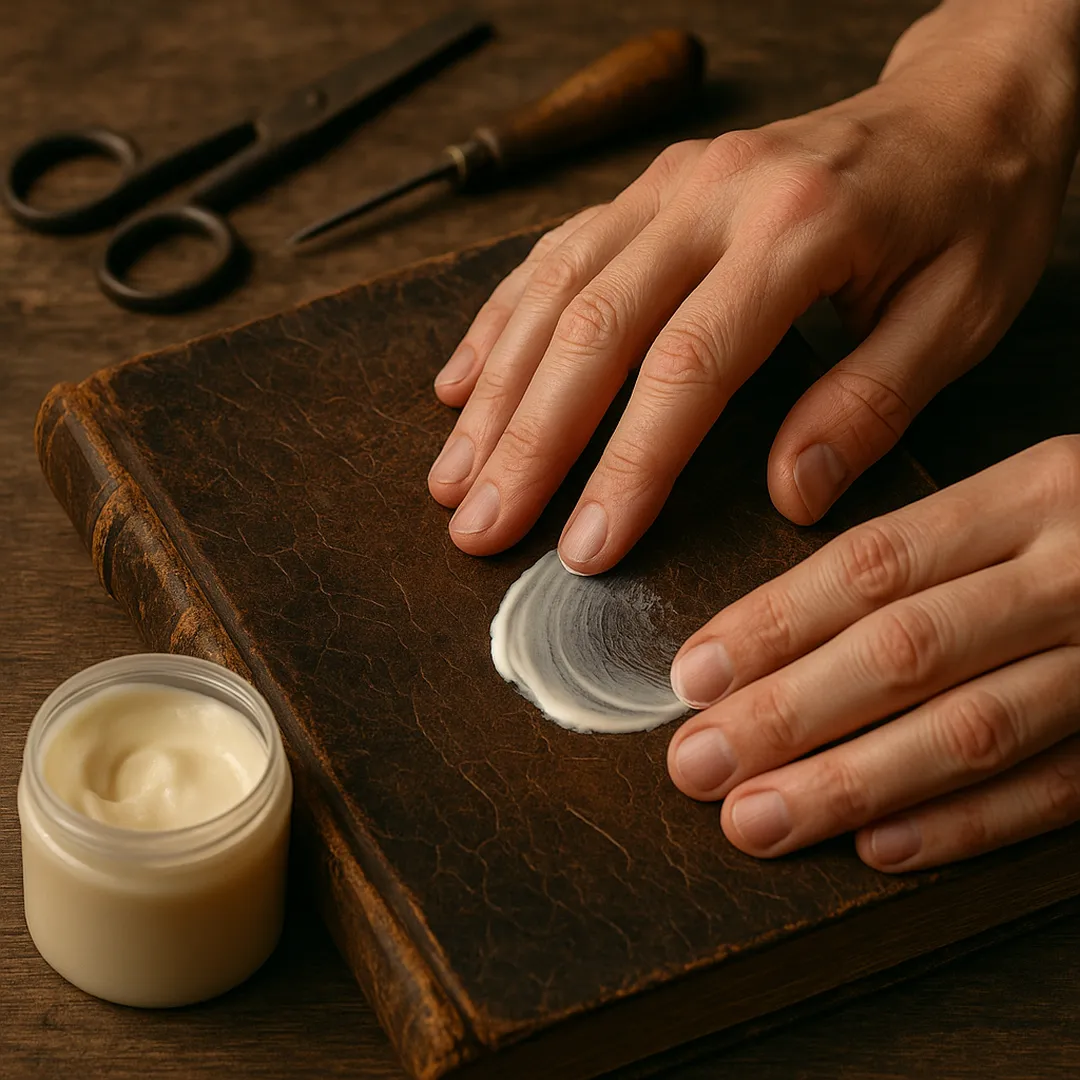
Book Repair & Conservation
Have a precious book with a family monogram that has begun to fade? We can help restore it and keep the legacy of its story alive.