Archival Paper Engineering for White Label Journal Durability
Hibrkraft ensures custom leather journals use Archival, pH-Neutral paper for permanence and long-term brand integrity.
by Aika Mentari · February 5, 2026
The image captures a moment of quiet creation—the deliberate glide of a fountain pen across a smooth, receptive page. It’s an intimate, focused act. In our Cileungsi workshop, this is the very moment we engineer for. The air here isn’t filled with the roar of a factory, but with the subtle, human-scale sounds of craftsmanship: the rhythmic tap of a hammer setting a rivet, the soft rustle of Indonesian leather being inspected, the focused silence of our nine craftsmen as a needle and thread unite paper signatures into a book block. It’s the earthy scent of full-grain hide from our partners in Garut and the faint, sweet smell of bookbinding adhesive that tells you something of value is being made here.
That single, warm-toned page under the writer’s hand is the culmination of a thousand unseen decisions. Its ability to accept the liquid ink from a fountain pen without feathering or bleeding through is not an accident; it is a testament to its material science. This seamless user experience connects the hand of the writer directly to the hands of the craftsmen who built the journal. Our entire manufacturing philosophy is built on this principle: the physical object must be engineered with a permanence worthy of the important thoughts it is destined to hold. This deep dive into the technical context of paper systems is the foundation of every bulk and white label journal we create, ensuring your brand’s story endures.
We engineer brand legacies, not just leather-bound notebooks.
Engineering Longevity in White Label Leather Journals: The Technical Context of Acid-Free and Archival Paper Systems
For any B2B buyer, from a procurement manager to a brand strategist, the specifications of a paper sheet are the most critical variable in determining a journal’s lifespan and its ability to reflect a premium brand identity. The term “acid-free” is the most common signifier of quality, but it is also one of the most misunderstood. From a material engineering perspective, “acid-free” simply defines a chemical state: the paper has a neutral or alkaline pH (7.0 or higher) at the moment of its creation. This is a crucial first step, as it ensures the paper is devoid of the active acids that catalyze the chemical reaction—acid hydrolysis—that breaks down cellulose fibers, causing them to become brittle and yellow. However, specifying “acid-free” alone is insufficient for guaranteeing true, long-term permanence.
| Attribute | Hibrkraft Premium Standard (True Archival) | Typical Mass-Market “Acid-Free” Swag |
|---|---|---|
| Fiber Source & Lignin | Lignin-free, high-alpha cellulose pulp. Often 100% cotton, the purest and most stable form of cellulose. | Can be made from groundwood pulp that still contains lignin, which will oxidize and create acid over time, defeating the purpose. |
| pH & Buffering Capacity | Alkaline (pH 8.5+). Always contains an alkaline buffer (e.g., calcium carbonate) to actively neutralize future acid attacks from the environment. | Neutral (pH 7.0+) at manufacture. May lack a sufficient alkaline reserve, leaving it vulnerable to long-term acidification. |
| Additives & Purity | Free of Optical Brightening Agents (OBAs), which can yellow over time. Strict limits on metallic content and other impurities. | Often contains OBAs to mask low-quality pulp. These chemicals break down under UV light, leading to blotchy discoloration. |
| Projected Lifespan | Engineered to last 100+ years under proper storage, making it a true generational artifact. | Noticeable degradation is likely within 10-30 years. A high-quality disposable, not a permanent object. |
| Brand Perception | Communicates foresight, stability, and an unwavering commitment to the highest quality. A true brand asset. | Communicates a surface-level commitment to quality without the underlying substance. A potential brand liability. |
Source: the five rows are this article’s own comparison table between Hibrkraft’s archival paper standard and typical mass-market “acid-free” paper, reproduced word for word and given a row filter so a single parameter can be found quickly. The comparison is Hibrkraft’s own account of the two grades, not an independent laboratory test, an ISO rating or a third-party certification. The lifespan row states the article’s own projections — 100+ years against 10–30 years — not a warranty term or a measured result.
A true “archival” standard is a far more rigorous discipline. It moves beyond the initial chemical state to encompass the paper’s entire material composition and long-term structural integrity. Archival paper must be free of unbleached or groundwood pulp, which contains lignin—the organic polymer that acts as a ticking time bomb for acid formation. Furthermore, it must be devoid of Optical Brightening Agents (OBAs), chemical additives that create an artificial whiteness but are notoriously unstable, breaking down over time to cause yellowing. This deep dive into the chemistry of paper, exploring the interplay of pH and alkaline buffers, is foundational to creating a lasting product. You can learn more in our detailed guide on the role of pH-neutral and alkaline paper systems.
Because the term “archival” is currently unregulated across the industry, it is often misused. A manufacturer can label a product as archival without meeting these stringent criteria. This makes it imperative for buyers to scrutinize material specifications. Key performance indicators include lightfastness—a material’s resistance to fading when exposed to light, often quantified on the “Blue Wool” scale—and the presence of an alkaline buffer like calcium carbonate, which actively neutralizes acids from the environment. Resistance to fading is another key metric of archival performance, ensuring the journal’s contents and the paper’s color remain stable over time. We explore this in our article on engineering resistance to yellowing and fading.

The Sustainable Substrate: An Ecological and Ethical Dimension
Engineering for longevity must also account for environmental impact. Traditional wood-pulp paper manufacturing is a resource-intensive process, requiring an average of 2,700 liters of water to produce a single ton of paper. As corporate gift buyers and brand managers become more sophisticated in their ESG (Environmental, Social, and Governance) goals, the ecological footprint of their branded merchandise has come under intense scrutiny. A product cannot be considered truly “high-quality” if it is the result of irresponsible material sourcing.
This has led to a strategic shift toward more sustainable substrates. Recycling remains a cornerstone of this effort; processing one ton of recycled paper saves approximately 26,500 liters of water and 1,400 liters of oil compared to using virgin pulp. Beyond recycling, material science has embraced “tree-free” alternatives. These are fibers derived from agricultural residues like sugarcane bagasse or high-yield, fast-growing crops like bamboo and hemp. From a lifecycle perspective, these materials are often superior, requiring fewer chemical inputs and diverting waste from landfills. Choosing these materials is a powerful statement, aligning a brand’s physical assets with its environmental values. For a deeper look into these alternatives, read our guide to sustainable and tree-free substrates.
This mindful approach to material sourcing is an extension of our workshop’s core ethos. Our team of nine craftsmen in Bogor understands that we are stewards of the materials we use. A machine assembling notebooks at high speed is indifferent to the origin of its components. A craftsman who handles Indonesian leather from Magelang every day develops a respect for the animal and the tanner. A bookbinder who feels the unique fibrous texture of sugarcane paper understands its story. This human connection to the material results in a more thoughtful, higher-quality end product and ensures that the story of your brand’s commitment to sustainability is genuinely embedded in the object itself.
The Litmus Test: Understanding the Archival Standard vs. The “Acid-Free” Label
The most important test for a procurement manager is one of critical thinking: distinguishing between a baseline chemical state (“acid-free”) and a comprehensive engineering standard (“archival”). This distinction is the ultimate guarantor of longevity. A paper can be acid-free on the day it leaves the mill, but if it lacks an alkaline buffer, it has no defense against the acidic pollutants in the atmosphere and will eventually become acidic. If it contains un-removed lignin, it will generate its own acid over time. If it is bound with acidic glue or cover boards, acid will migrate into the pages, causing them to yellow from the edges inward.
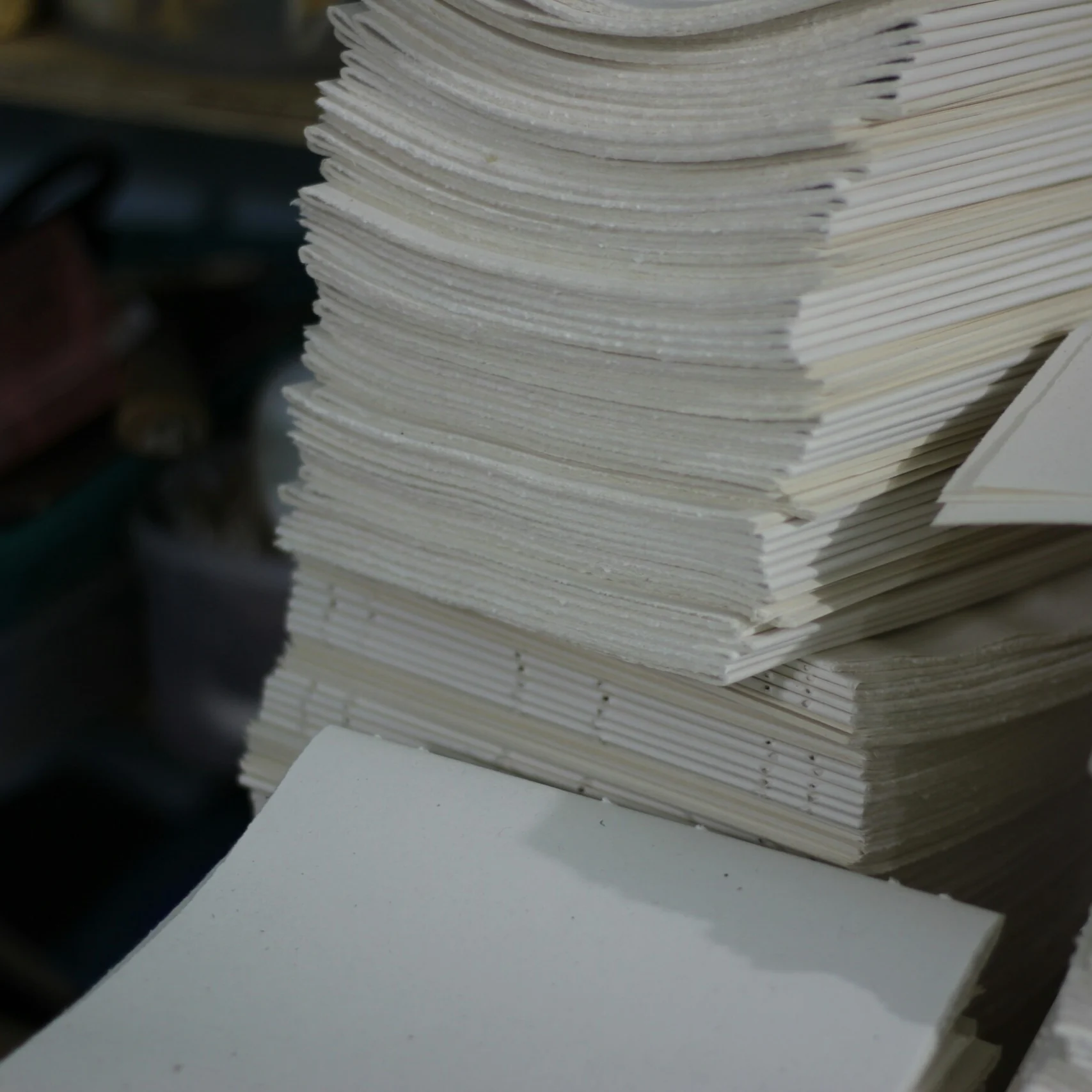
The physics of permanence requires a holistic system. True archival quality is achieved when every component of the journal is chemically stable and works in concert. The paper must be made from purified, lignin-free pulp—with 100% cotton being the gold standard. It must be buffered with an alkaline reserve. The adhesives must be pH-neutral and remain flexible. The binding thread must be stable. The cover boards must be acid-free. This is the difference between a simple product and an engineered system. This distinction is perhaps the most critical for any buyer specifying a premium product. We’ve written a comprehensive article dedicated to why acid-free paper is not necessarily archival.

“Anyone can buy a sheet of paper with a neutral pH. That is easy. The craft is in building a complete, balanced system around it. The paper, the thread, the glue, the leather—they must all speak the same chemical language of permanence. Otherwise, the book will eventually tear itself apart. We build for harmony.”
This philosophy from our Head Craftsman is our promise to our B2B clients. We ensure the entire product ecosystem is stable. A failure in one cheap component can compromise the entire object and, by extension, the brand reputation it represents. When your client or employee uses one of your branded journals five or ten years from now, the still-creamy pages and the strong, flexible binding will be a silent, powerful testament to your company’s commitment to lasting quality.
Our quality control process is designed to enforce this holistic standard. We don’t just check a supplier’s spec sheet; we test how materials interact. How does our debossing process affect a new batch of PU leather? Does this shipment of bookpaper have the right sizing to prevent feathering with a variety of inks? Our 100% inspection policy—where every single finished unit is manually opened, flexed, and examined—is our final guarantee that the system is sound. We catch potential failures before they ever leave our workshop.
The Solution: A Future-Proof Brand Asset with Tangible ROI
By moving beyond simple labels and embracing a holistic, engineering-led approach, the final product becomes more than a corporate gift. It becomes a durable brand artifact—a future-proof asset that actively communicates your brand’s values of quality, foresight, and sustainability. It’s an object designed to be kept, used, and valued for years, ensuring your brand remains a positive presence in your stakeholders’ lives long after the initial point of contact.
This delivers a powerful and lasting Return on Investment (ROI). Unlike disposable swag with a short lifespan, an archival-quality journal generates brand impressions for years, if not decades. The cost-per-impression trends towards zero over time. More importantly, the quality of these impressions is exceptionally high, reinforcing a premium identity and building genuine brand loyalty. It is a tangible investment in your company’s reputation.
Our commitment to this standard is backed by our transparent defect replacement policy. While the nature of handcrafting with natural materials means each piece is unique, we guarantee its functional and archival integrity. If any product fails to meet the agreed-upon technical standards due to our materials or craftsmanship, we will replace it. This is our pledge of accountability to you and your brand.

Library
From a paper spec to an actual commission
Everything above is the engineering case for a paper standard — fiber, pH, additives, structure. Turning that standard into a real run means a second set of decisions: cover material and proportion, binding and paper weight, and the order size that makes an archival-grade commission worth running. These three guides go one level deeper into how a workshop actually makes those calls. All three open straight in your browser, free, with no sign-up. They are written in Indonesian for our workshop team’s own reference; message us and an English-speaking member of the team will walk you through the same decisions.
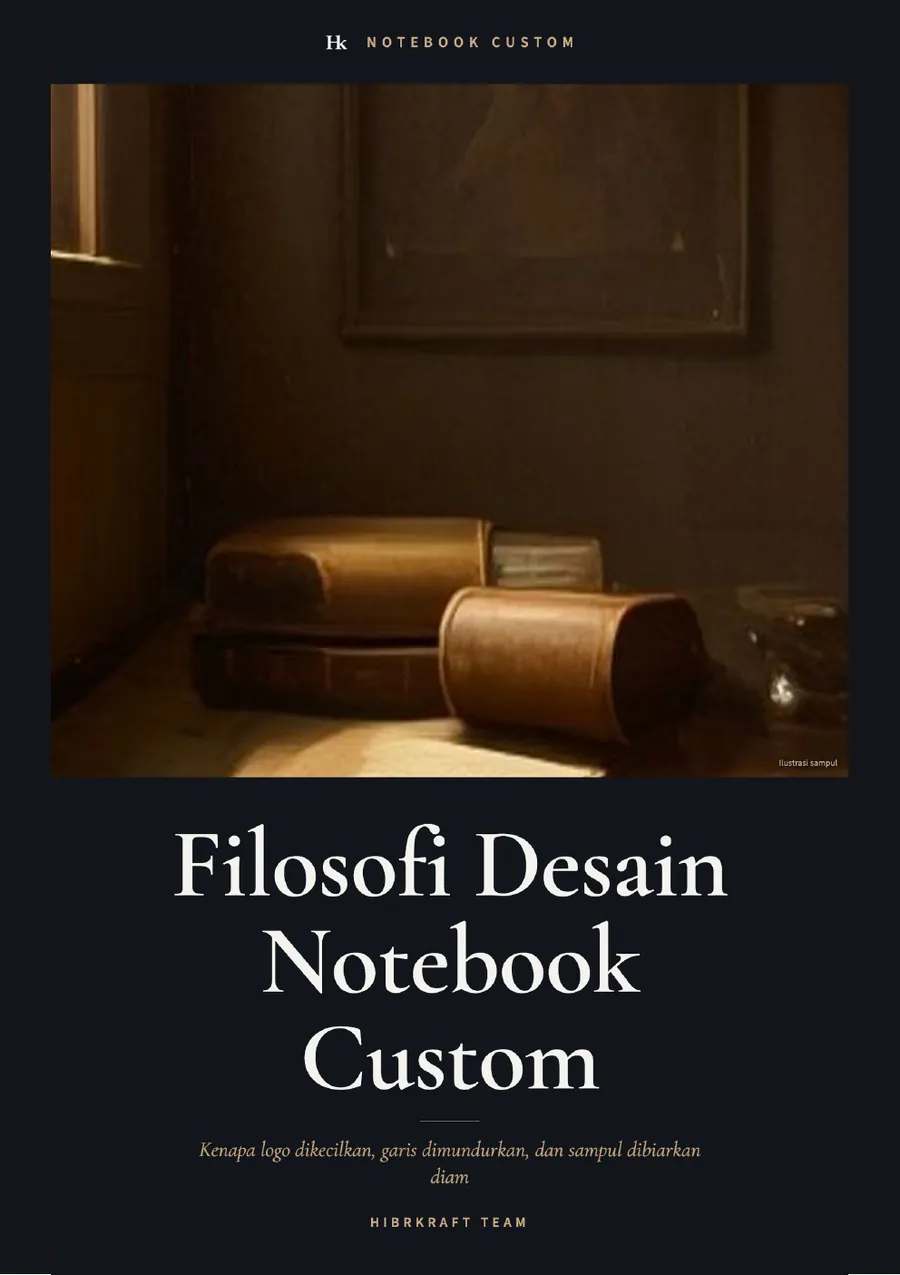
Design guide
Filosofi Desain Notebook Custom
Why the logo gets smaller, the rule moves back, and the cover is left quiet. Logo placement, cover proportion and page margins — with the reasoning, not just the rule.
Read the PDF
Specification guide
Panduan Komposisi Notebook Custom
The order the decisions come in, from intended use down to the leather, including the ones that pull against each other. Paper weight, number of signatures, size and stitch type — and where one choice closes off another.
Read the PDF
For the ones running numbers
Studi Kelayakan Notebook Custom
Working-hour capacity as the ceiling on every projection. Break-even, sensitivity analysis, and why handcraft cannot be modelled the way a factory is modelled.
Read the PDFFiles open in your browser rather than downloading straight to your device. All three are A5 and may be printed for your own use. They are written in Indonesian — the specification tables, diagrams and cost models carry over even if you do not read the language, and we are glad to talk any of it through in English.
Why Partner with Hibrkraft Kreasi Indonesia?
Hibrkraft is a dedicated workshop in Cileungsi, Bogor, not an impersonal factory. Our model of “handcraft at scale,” executed by our small team of nine skilled artisans, allows us to produce up to 2,000 premium units per month. This unique positioning provides our clients with the consistency and capacity of a professional manufacturer, combined with the meticulous attention to detail and material expertise of a master craftsman’s studio.
Our White Label service is a true collaboration. We act as your dedicated production partner, making our workshop an extension of your brand. The final product is exclusively yours—built to your technical specifications and bearing your branding, with no Hibrkraft marks. You benefit from direct communication with the owners, ensuring a transparent, efficient process from initial consultation to final delivery.
We are experts in international logistics, with a proven history of successfully delivering bulk orders to clients in Canada, Germany, Malaysia, the Netherlands, the UAE, and worldwide. We partner with trusted carriers like DHL Express to ensure your investment is protected and arrives on schedule. Let us manage the complexities of manufacturing, so you can focus on building your brand with a product of uncompromising quality.
Let’s engineer a legacy together.
Sources & References
- Berisford, K. M. (2024). Acid-Free vs Archival: What You Need to Know About Paper Quality for Your Art.
- StepbyStepArt (2025). Comments on Acid-Free vs Archival.
- Suryandono, A. R., et al. (2023). The experiment of recycled paper-making process and its water resistance on a household scale.
- Wikipedia (2024). Tree-free paper.
Disclaimer: this post is written in English to reach a wider, international audience.