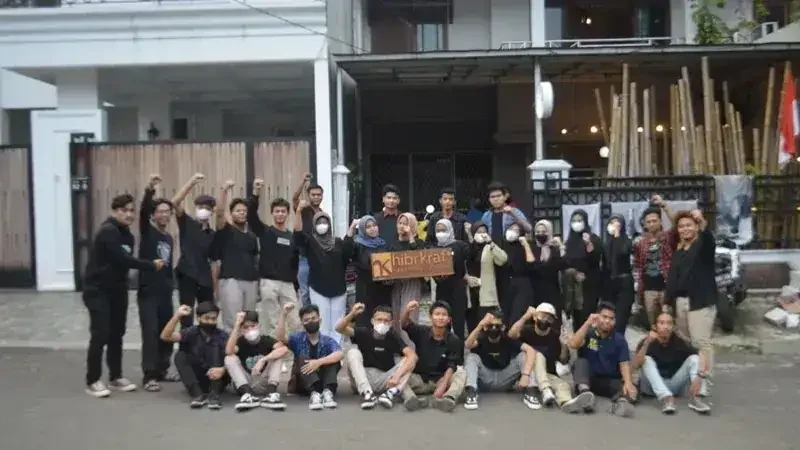
Technical Benchmarks for Archival Permanence: Engineering Durability into White Label Journal Substrates
Hibrkraft engineers custom leather journals with true Archival permanence, verified by 100% Cotton, Blue Wool testing, and guaranteed by 100% QC.
by Aika Mentari · February 5, 2026
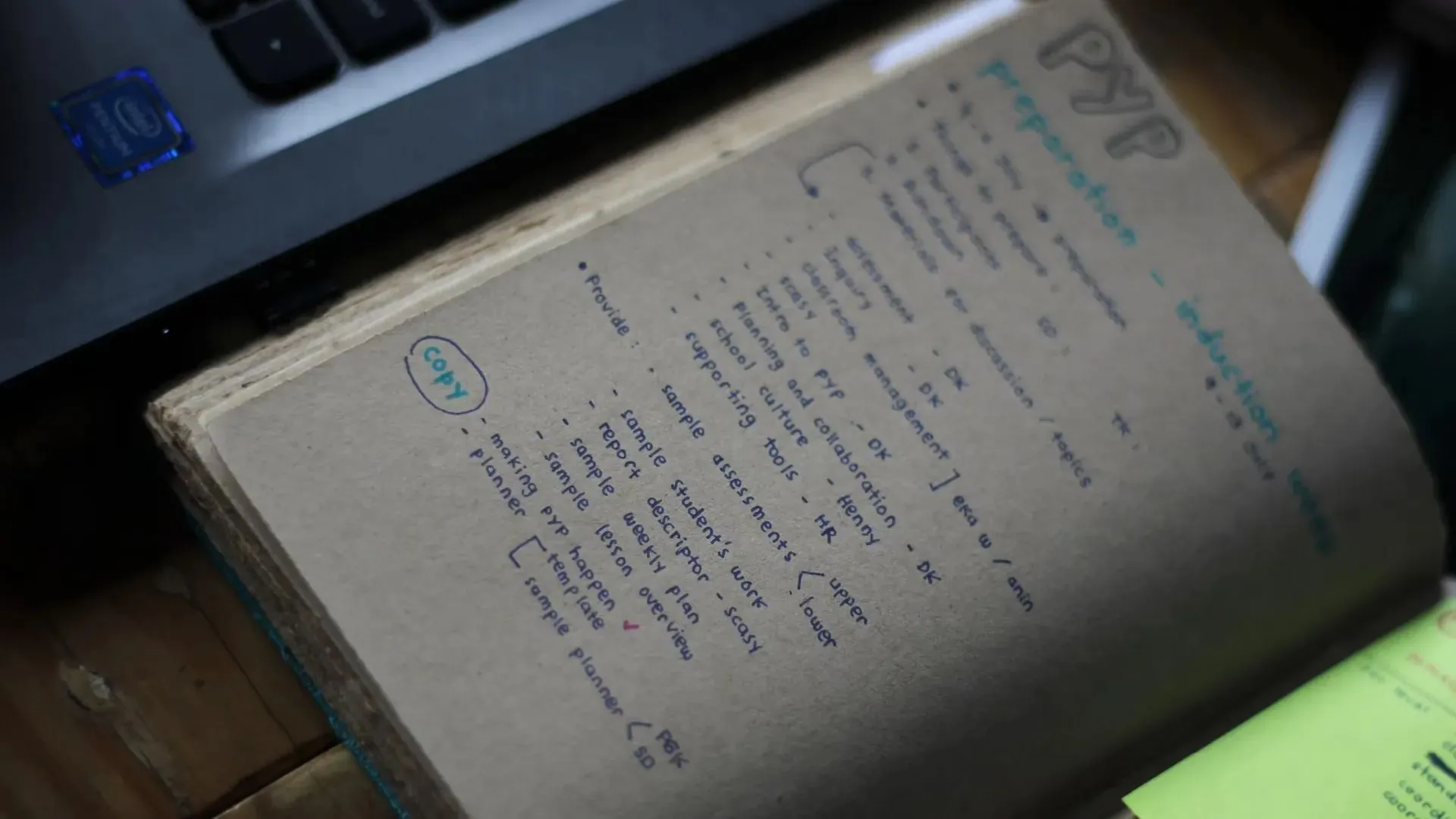
The image shows a journal not as a pristine object, but as a working tool. It lies open next to a laptop, its kraft-colored pages filled with the architecture of a plan—notes, lists, and ideas for a “PYP preparation” and “induction.” This is a scene familiar to us in our Cileungsi workshop. It’s the very purpose for which we build our books: to be a reliable partner in the process of creation and organization. The visible strength of the journal’s thick, well-worn spine and the satisfyingly tactile paper speak a language of durability. You can almost feel the reassuring heft of it, the confidence that it won’t fall apart halfway through a project.
This tangible sense of reliability is no accident. It is the direct result of a manufacturing philosophy that honors the relationship between a book’s physical structure and the chemical engineering of its core component: the paper. The strength of the binding is meaningless if the pages themselves are destined to become brittle. The value of the notes is compromised if the paper is engineered to yellow and fade. This deep connection between visible craft and invisible science is where true, lasting quality is forged. It is where we, as craftsmen, must go beyond assembling materials and begin engineering archival systems worthy of your brand.
We build tangible assets, engineered for permanence and brand integrity.
For a procurement manager, the distinction between a “good” product and a “permanent” one lies in a series of technical benchmarks that are often obscured by marketing language. In the world of stationery, no term is more critical—or more frequently misunderstood—than “archival.” While many suppliers will highlight a paper as “acid-free,” this is merely a baseline characteristic, not a guarantee of long-term permanence. Archival paper is an entirely different class of material, distinguished by its adherence to rigorous standards designed to ensure its structural and chemical integrity for centuries. It’s an engineered system, not just a treated material. From a material engineering perspective, achieving this status requires a series of non-negotiable specifications that directly impact the final product’s durability and brand value.
| Technical Benchmark | The Hibrkraft White Label Archival Standard | Mass-Market “Good Quality” Standard |
|---|---|---|
| Cellulose Fiber Source | 100% cotton or fully purified, lignin-free chemical pulp. Prioritizes long, stable, high-purity cellulose fibers for maximum tensile strength. | May use groundwood or unbleached pulp which contains lignin, the primary catalyst for acid degradation and embrittlement. |
| Structural Integrity | High tensile and tear strength, resistant to degradation from mechanical stress (e.g., page turning, binding tension). | Fiber strength can be significantly lower (up to 74.3% weaker in some recycled pulps), making it prone to tearing at the spine. |
| Chemical Purity | Total exclusion of Optical Brighteners (OBAs). Strict, verifiable limits on metallic content and other reactive impurities. | Often uses OBAs to create an artificial whiteness, which then chemically breaks down, causing blotchy yellowing. |
| Lightfastness | High rating on standardized scales (e.g., Blue Wool scale), ensuring minimal fading or discoloration from light exposure. | Not typically rated or guaranteed. Prone to rapid fading, which can compromise the legibility of written content over time. |
| Verification | Relies on verifiable supplier specifications and third-party certifications. Hibrkraft acts as the expert verifier. | Relies on unregulated, often inconsistent marketing terms like “archival quality” without technical justification. |
Source: the five-parameter comparison as stated in this article’s own analysis above; the “Hibrkraft White Label Archival Standard” column is the workshop’s own specification, not an independently published industry standard. The 74.3% fiber-strength figure is stated in the article without a named source. “Archival,” “acid-free” and the Blue Wool lightfastness scale are real, defined terms, with independent authorities listed in Sources & References below.
The first and most important benchmark is the exclusion of groundwood or unbleached pulp. These materials are the enemy of permanence. They contain high levels of lignin, an organic polymer that breaks down over time, creating acids that attack the paper’s own cellulose fibers. This is the process that causes catastrophic embrittlement and discoloration. True archival substrates are engineered from pulp where the lignin has been completely removed, or from fibers that are naturally lignin-free. For this reason, 100% cotton is recognized as the pinnacle of archival manufacturing. Its long, pure cellulose fibers provide unparalleled tensile strength and chemical stability, ensuring the paper can withstand the mechanical stress of binding and centuries of use.
However, because the term “archival” is not legally regulated or globally standardized, it is often applied inconsistently by manufacturers. This puts the onus on the buyer to scrutinize the technical data. A truly archival paper will have specifications that go beyond pH to include strict limits on metallic content (which can catalyze oxidation) and the total elimination of optical brighteners. These brighteners are a chemical shortcut, additives that make a sheet appear whiter but compromise its long-term stability. At Hibrkraft, part of our white label service is to act as your expert partner, navigating these technical specifications to ensure the materials selected for your project meet true permanence benchmarks, protecting your investment and your brand’s reputation for quality.

Library
The Design and Costing Decisions Behind a Specification Like This
The five parameters in Exhibit 1 — fiber source, structural integrity, chemical purity, lightfastness, and verification — are the technical layer inside a larger specification: cover material, binding style, page count, and the production run that make a white label commission cost out correctly. These three guides go one level deeper into how a workshop actually makes those calls: cover material and proportion, paper and binding specification, and the cost math behind a real production run. All three open straight in your browser, free, with no sign-up. They are written in Indonesian for our workshop team’s own reference; message us and an English-speaking member of the team will walk you through the same decisions.
Panduan desain
Filosofi Desain Notebook Custom
Kenapa logo dikecilkan, garis dimundurkan, dan sampul dibiarkan diam. Penempatan logo, proporsi sampul, dan margin halaman — dengan alasannya, bukan sekadar aturannya.
Baca PDF
Panduan spesifikasi
Panduan Komposisi Notebook Custom
Urutan keputusan dari kegunaan sampai kulit, lengkap dengan yang saling melawan. Gramatur kertas, jumlah kuras, ukuran, dan jenis jahitan — dan di mana pilihan satu memotong pilihan lain.
Baca PDF
Untuk yang berhitung
Studi Kelayakan Notebook Custom
Kapasitas jam kerja sebagai langit-langit setiap proyeksi. Titik impas, analisis sensitivitas, dan kenapa kerajinan tangan tidak bisa dihitung seperti pabrik.
Baca PDFFiles open in your browser, not a direct download to storage. All three are in Indonesian, A5 size, and free to print for your own use.
The Physics of Failure: Why Fiber Strength is Paramount
A journal is a mechanical system, and its weakest point will determine its lifespan. The physics of failure in a book is unforgiving. Even the strongest binding, like the sturdy exposed spine on the journal in the image, is ultimately reliant on the integrity of the paper it holds. Each stitch hole is a point of stress. Every time a page is turned, it exerts a tiny tearing force against the binding thread. Over thousands of repetitions, this force adds up. If the paper’s cellulose fibers are short and weak, they will inevitably break down, and pages will tear away from the spine.
This is where the technical benchmark of fiber quality becomes paramount. Research has demonstrated that lower-grade pulps or certain recycling processes can result in a strength decrease of up to 74.3% in cellulose fibers. This is a catastrophic loss of structural integrity. While we are strong proponents of sustainable sourcing, for projects demanding true archival permanence, there is no substitute for the high-purity, long-fiber pulp found in virgin archival-grade products or 100% cotton paper. The durability you can see and feel in a well-made book is a direct consequence of the microscopic strength of these individual fibers working in concert. When we help a client specify a paper, we are not just thinking about how it looks or feels, but about how its tensile strength will interact with the mechanical forces of the chosen binding style over a lifetime of use.
This deep understanding of material interplay is a hallmark of our “Handcraft at scale” model. In our Bogor workshop, the same craftsman who operates the sewing machine also inspects the paper stock. They develop a tactile knowledge, a feel for when a paper is too brittle or when its grain direction will fight against a clean fold. This human-centric quality control, which is impossible in a fully automated factory, allows us to catch potential points of mechanical failure before they are bound into your product. We are not just assembling components; we are ensuring the harmony of an entire physical system.
The Core – The Durability Test: Beyond the Spec Sheet
The ultimate test of archival durability is, of course, a century on a shelf. Since that is impractical, our quality assurance process serves as a proxy, rigorously testing for any signs of weakness that would compromise long-term stability. This begins with scrutinizing our suppliers’ technical specifications. We look for lightfastness ratings, often quantified using the “Blue Wool” scale, which measures a material’s resistance to fading against a known standard. This ensures the paper’s color and, more importantly, the writing on it, will remain stable and legible for generations.
But our test goes beyond the spec sheet. We test the materials in a real-world context. How does a paper respond to debossing? Does it hold a crisp impression without cracking? How does it interact with our pH-neutral adhesives? Does it absorb the adhesive too quickly, creating a weak bond? We perform these hands-on tests because we know that even a paper with perfect archival specs can fail if it is not integrated correctly into the finished product. A journal must be housed in a stable environment to meet its full potential—ideally at 20°C and 55% relative humidity—but we build it to be as resilient as possible for daily use in less-than-ideal conditions.

“A specification sheet tells you a material’s potential. The craftsman’s hands tell you its reality. We trust the numbers, but we verify with our senses. A book must feel strong to be strong. This is our final, and most important, quality check.”
This principle from our Head Craftsman is our promise to you. The unregulated nature of the “archival” label means that trust and verification are paramount. We act as your verifier. Our 100% inspection policy is not just about catching cosmetic flaws; it’s about confirming the structural integrity of every single unit. We flex the spine, we riffle the pages, we check the tension of the stitching. We ensure that the finished product lives up to the promise of its high-performance components.
Consider the real-world application for your brand. When you provide a journal to a client or team member that is engineered to this standard, you are making a powerful, non-verbal statement. You are communicating that your brand stands for durability, foresight, and an uncompromising commitment to quality. The journal becomes a physical metaphor for the reliability of your own company. It is an investment that continues to pay dividends in brand perception every time it is picked up, for years and even decades to come.
The Solution: A Verifiably Permanent Brand Asset
By focusing on these technical benchmarks, we move beyond subjective claims of quality to deliver a verifiably permanent brand asset. The result is a white label journal that is not just aesthetically pleasing, but structurally and chemically engineered for the long haul. This is a product designed to carry a brand’s legacy, to safeguard important information, and to serve as a constant, tangible reminder of a commitment to excellence.
This engineering-led approach provides a clear and defensible Return on Investment (ROI). Instead of spending a budget on disposable marketing items with a short lifespan, you are investing in a durable asset that generates goodwill and reinforces a premium brand identity for years. The long-term cost-per-impression is minuscule, and the quality of each impression is exponentially higher. It is a strategic investment in brand equity.
Our commitment to these standards is absolute, and so is our accountability. We are transparent about the materials we use and the processes we employ. Our defect replacement policy is a core part of our service guarantee. While every handcrafted item possesses unique character, its functional and structural integrity is non-negotiable. If any product fails to meet the technical benchmarks we agreed upon, we will replace it. This is the foundation of a trusted B2B partnership.
Why Partner with Hibrkraft for Your White Label Journals?
Hibrkraft is a specialized workshop in Cileungsi, Bogor, where craftsmanship and technical knowledge converge. Our team of approximately nine skilled artisans operates on a model of “handcraft at scale,” giving us the capacity to produce up to 2,000 units per month without sacrificing the meticulous attention to detail that defines our work. This allows us to serve significant bulk and white label orders with a level of quality that large, automated factories cannot match.
Our white label service is a collaborative partnership. We are your dedicated Indonesian manufacturing arm. The final product is exclusively yours, built to your exact specifications and bearing your branding, with no Hibrkraft markings. You receive the benefit of direct owner communication for a streamlined and transparent process, backed by our deep expertise in material science, bookbinding mechanics, and global logistics.
We have a proven history of successfully delivering custom orders to a global clientele, including businesses in Canada, Germany, Malaysia, the Netherlands, and the UAE. We manage the complexities of international shipping with trusted carriers like DHL Express, ensuring your investment arrives safely and on time. Let us be your expert partner in creating a product that is not just beautifully made, but engineered to endure.
Let’s build something that lasts.
Sources & References
Checked 26 August 2026 — the first two entries below are real and live, not broken or fabricated. Berisford is the confirmed author of an art-tutorial hobby site (stepbystepart.co.uk), and the second entry is a reader comment beneath that same article, not a separate publication. Neither is a paper-conservation or materials-science authority, so they do not carry this article’s climate, chemistry or lightfastness claims; the Library of Congress and the ISO/ANSI standard identifiers added below do.
- Berisford, K. M. (2024). Acid-Free vs Archival: What You Need to Know About Paper Quality for Your Art. STEP BY STEP ART, an art-tutorial site.
- StepbyStepArt (2025). Comments on Acid-Free vs Archival. A reader-comment reply beneath the article above, not a separate publication.
- Suryandono, A. R., Hardiansyah, W. A., Lazulfa, N. I., & Nabilah, A. A. (2023). The experiment of recycled paper-making process and its water resistance on a household scale.
- Library of Congress, Preservation Directorate. Preserving Your Books — Storing Your Books: the safe temperature and relative-humidity range for most books.
- Library of Congress, Preservation Directorate. Preserving Your Books — Key Preservation Terms: Acid-free, Archival, Lignin-free.
- Wikipedia contributors. Acid-free paper. For the ISO 9706 (permanent paper) and ISO 11108 (archival paper) standard distinction, and ANSI/NISO Z39.48-1992 (R2009).
- Wikipedia contributors. Lightfastness. For the Blue Wool Scale (rated 1–8) and its basis in ISO 105-B01/B02 colour-fastness-to-light testing.
Disclaimer: this post is written in English to reach a wider, international audience.