
The Ultimate Checklist for Sourcing Custom Journals for Retail Stores
Boutique Owner's Guide: What to look for in paper quality, binding durability, and cover customization options to stock profitable, high-quality products.
by Aika Mentari · February 12, 2026
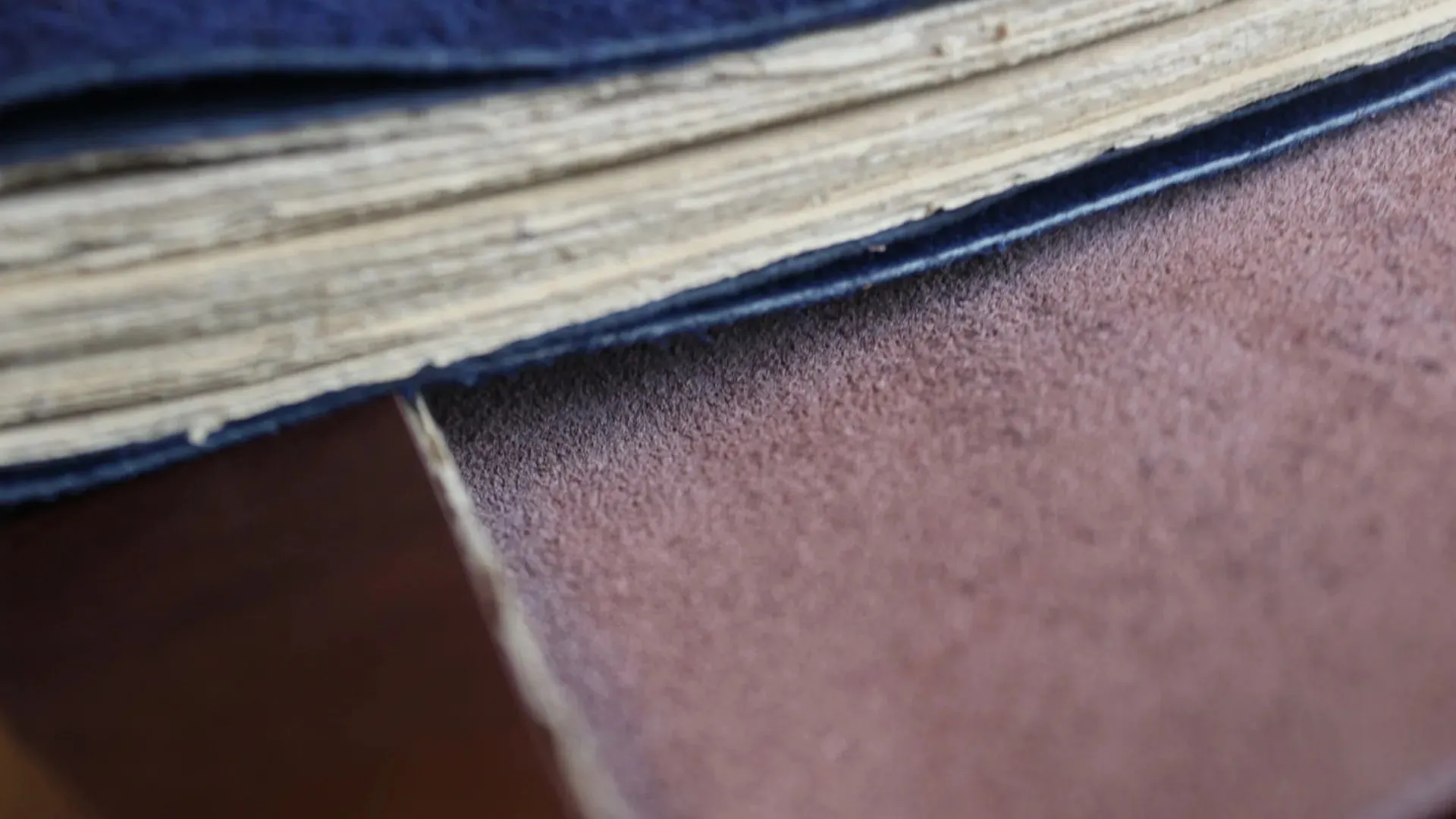
The image is a landscape of texture, a close-up that speaks in a language older than words. In the foreground, the soft, napped surface of a brown suede leather, its fibers catching the light, invites the sense of touch. It feels warm, organic, and real. Above it lies another journal, its navy blue cover a darker shade of the same velvety texture. The most captivating detail is the edge of the text block—a thick collection of paper, not perfectly machine-guillotined, but with a subtle, rustic unevenness. It’s the visual evidence of paper signatures folded and gathered by a human hand in our Cileungsi workshop. You can almost feel the satisfying friction of running your thumb along those pages.
This single, quiet photograph is the ultimate test for a retail buyer. In a world of shrink-wrapped, mass-produced uniformity, an object like this tells a story before a single word is read from its pages. It speaks of craftsmanship, of natural materials sourced from the Indonesian archipelago, and of an intentional process that values character over sterile perfection. For a boutique or stationery shop owner, whose entire brand is built on the promise of curation and discovery, this is the kind of product that stops a customer in their tracks. It is an object that asks to be picked up, and once it is in their hands, its inherent quality makes the sale.
Your shelf space is your most valuable asset; we build the products that earn their place there.
As a boutique or stationery store owner, you are more than a retailer; you are a curator. Your customers trust you to sift through a world of options and present them with a selection of beautiful, functional, and high-quality goods. The journals you stock are a direct reflection of your store’s brand and values. Choosing a supplier is therefore one of the most critical decisions you will make. It’s a choice between stocking a commodity product that forces you to compete on price, or a unique, story-rich artifact that allows you to command a premium price and build a loyal customer base.
This guide is a tactical checklist for making that decision. It is designed to arm you with the knowledge to vet suppliers and evaluate products, ensuring that every journal you bring into your store is an asset, not a liability. It’s about looking beyond the surface and understanding the structural and material details that separate a “keeper” from a product that will end up on the clearance table. The goal is to build a partnership with a manufacturer who understands the realities of the retail floor—a partner who builds products designed not just to be bought, but to be loved.
| Feature | “Good” (Entry-Level / Mass Market) | “Better” (Mid-Range / Boutique Standard) | “Best” (Premium / Artisan-Crafted) |
|---|---|---|---|
| Cover Material | Thin paperboard or basic, smooth PU Leather. Prone to corner damage and feels lightweight. | Thick, textured PU Leather or durable linen/bookcloth. Good tactile feel and durability. | Genuine Full-Grain or Top-Grain Indonesian Leather. Develops a patina, offers a unique sensory experience (smell, touch), and has exceptional longevity. |
| Binding Method | “Perfect Bound” (glued spine). Does not lay flat, spine can crack with use, pages may fall out. | Case Binding (standard hardcover). Durable and professional, but may not lay perfectly flat. | Coptic or Long Stitch Binding. Lays 180° flat for a superior writing experience. The exposed stitching is a visible mark of handcrafted quality. |
| Paper Quality | 70-80gsm, often acidic paper. Prone to ink bleed-through and yellowing over time. | 90gsm, acid-free HVS or Bookpaper. Smooth writing experience, minimal bleed-through. | 90gsm+ specialty papers (e.g., watercolor, Tomoe River). Archival, acid-free quality that caters to a discerning, niche audience (artists, fountain pen users). |
| Customization | Limited to a simple, single-color screen print of your store’s logo. | Clean debossing or foil stamping of a logo. Consistent and professional. | Deep, hot debossing of custom art, foil stamping, laser engraving. Option for personalization (e.g., initials), creating a high-value, exclusive item. |
| Retail Story | “A functional, affordable notebook.” (Commodity) | “A high-quality, durable journal for daily use.” (Premium Utility) | “A handcrafted, heirloom-quality journal made by artisans.” (Luxury Artifact) |
| Margin Potential | Lowest. Competition is high, forcing price-matching. | Good. Quality justifies a solid retail markup. | Highest. Uniqueness, craftsmanship, and story justify a significant premium price point. |
Source: the three-tier comparison as stated in this article’s own analysis above — a qualitative sourcing framework, not a measured dataset; the ordering reflects the author’s assessment and carries no numeric figures.
This chart is a strategic framework. While there is a market for every tier, a boutique store’s brand equity and profitability are built in the “Better” and “Best” categories. These are the products that create a “wow” moment for your customers, generate positive word-of-mouth, and turn first-time visitors into loyal patrons. At Hibrkraft, our workshop is purpose-built to operate exclusively in these top tiers. We use genuine Indonesian leathers, our craftsmen are masters of lay-flat stitch binding, and our 100% manual inspection process ensures a level of quality that mass-producers cannot replicate.

Deconstructing the Details: A Retailer’s Guide to Material Science
To confidently sell a premium product, you must understand the language of its construction. This knowledge empowers you to educate your customers, justify a higher price point, and make smarter sourcing decisions. Let’s delve into the tangible details that create perceived value.
The Cover’s Tactile Story: Suede vs. Full-Grain
The close-up in the user image showcases the rich texture of suede. Suede is a type of leather with a napped, fibrous finish. It is created from the underside of the animal hide, making it softer and more pliable than the exterior-facing leather. The “physics” of suede are in this fiber structure; it feels luxurious and warm to the touch because of the millions of tiny, velvety fibers on its surface. It tells a story of comfort and organic softness. In contrast, Full-Grain leather is the exterior of the hide. Its fiber structure is incredibly dense and tight, which is why it is so durable and water-resistant. It tells a story of strength, resilience, and heritage. As a retailer, being able to offer both textures allows you to cater to different customer preferences—the artist who wants a soft, inspiring object, and the professional who needs a rugged, durable companion.
The Paper’s Edge: A Tale of Two Finishes
Look closely at the edge of the paper block in the image. The pages are not perfectly flush, a style often called a “deckled” or rustic edge. This is a deliberate aesthetic choice that results from folding paper into signatures before binding. It is a visible cue that the journal was assembled by hand, not machine-guillotined in a massive stack. It immediately signals “artisan.” The alternative is a perfectly smooth, guillotined edge, which communicates precision and modernity. Neither is inherently better, but they tell different stories. A good supplier should be able to offer you both options, allowing you to curate a product line that perfectly matches your store’s aesthetic.
The Binding’s Promise: The Mechanics of Durability
The single greatest point of failure in a cheap notebook is the binding. A “perfect bound” book uses a strong but brittle adhesive to hold the pages to the spine. In the hands of a customer browsing in your store, a few forceful openings can crack this spine, rendering the book unsellable. A stitched binding (like Coptic, Long Stitch, or even the hand-sewn signatures of a Case Bound book) is a mechanical bond. It relies on the tensile strength of waxed polyester thread, interlocked through the pages. This is a far more resilient system. It can withstand the rigors of the retail floor and years of daily use. When you choose a stitched binding, you are choosing a product with a dramatically lower rate of in-store damage and post-purchase returns.
The Core – The “On-the-Shelf” Durability Test
The life of a journal in a retail store is a tough one. It is picked up, opened, flexed, and flipped through hundreds of times before it is purchased. This is the ultimate, real-world stress test. Your sourcing checklist must prioritize products that are engineered to survive this environment. A product that looks worn or damaged after a week on display is a direct loss to your bottom line.
This is where your choice of manufacturing partner becomes paramount. A mass-production factory is optimizing for production speed. A craft workshop like Hibrkraft is optimizing for longevity. We anticipate the “On-the-Shelf” test in our very design and construction process.
- Reinforced Corners: For our case-bound books, we use a technique called “skiving” where we thin the leather or PU material at the corners before wrapping it around the book board. This allows for a sharp, clean, 90-degree corner that is far more resistant to the fraying and softening that occurs from being repeatedly handled.
- Durable Thread: We use a high-denier, waxed polyester thread for our stitched bindings. The polyester is incredibly strong and resistant to abrasion, and the wax coating helps to lock the stitches in place. This ensures the spine remains tight and secure, even after countless customers have tested its lay-flat capabilities.
- Permanent Branding: Our preferred branding method, hot debossing, physically compresses the fibers of the cover material. Unlike a screen print that can be scratched or peel over time from handling, a debossed mark is a permanent part of the journal. It will look as crisp on the day it’s sold as the day it arrived from our workshop.
The most significant factor in passing this stress test is the one you cannot see: our quality control process. The greatest risk for a retailer is receiving a case of journals where 10% have minor but noticeable defects—a crooked logo, a small glue spot, a loose thread. These are the units that a customer will pick up, notice the flaw, and put back on the shelf, choosing another brand or leaving empty-handed. This is a silent killer of sell-through. Our 100% manual inspection process is your defense against this. Every one of the nine artisans in our workshop is also a quality inspector. We check every single unit for these exact flaws, ensuring that every product you receive is ready for your most discerning customer. This is our guarantee of shelf-readiness.

“A retailer’s trust is earned one perfect product at a time. A single defective item on a shelf can call the entire curation into question. Our obsession with quality is, at its core, an obsession with protecting our retail partner’s hard-won reputation.”
The Solution: Stocking a Story, Not Just a Product
The result of a thoughtful sourcing strategy is a curated collection that tells a cohesive story. Your customers will begin to understand that when they come to your store, they will find objects with integrity, craftsmanship, and a unique point of view. This is how you build a brand that is immune to the price-slashing pressures of online marketplaces. You are no longer selling a commodity; you are selling an experience.
By partnering with a workshop like Hibrkraft, you gain access to a powerful narrative. You can tell your customers that your journals are handcrafted by a small team of artisans in Bogor, Indonesia. You can speak with authority about the locally sourced leather and the traditional bookbinding techniques. This story adds immense perceived value to the product and creates an emotional connection that a generic “Made in China” sticker never can. It is a story that justifies a premium price and fosters a deep sense of loyalty.
Our commitment to you is a partnership. We provide transparent pricing, direct communication with our owners, and a 100% defect replacement policy that completely de-risks your investment. We are as invested in your sell-through as you are because your success is the ultimate measure of our own.

Library
The Specification Decisions Behind the Checklist Above
The comparison chart above — cover material, binding method, paper weight, and customization — reflects the same specification decisions a workshop makes on every unit you stock, tier by tier. These three guides go one level deeper into how a workshop actually makes them: cover material and proportion, paper and binding specification, and the cost math behind a real production run. All three open straight in your browser, free, with no sign-up. They are written in Indonesian for our workshop team’s own reference; message us and an English-speaking member of the team will walk you through the same decisions.
Panduan desain
Filosofi Desain Notebook Custom
Kenapa logo dikecilkan, garis dimundurkan, dan sampul dibiarkan diam. Penempatan logo, proporsi sampul, dan margin halaman — dengan alasannya, bukan sekadar aturannya.
Baca PDF
Panduan spesifikasi
Panduan Komposisi Notebook Custom
Urutan keputusan dari kegunaan sampai kulit, lengkap dengan yang saling melawan. Gramatur kertas, jumlah kuras, ukuran, dan jenis jahitan — dan di mana pilihan satu memotong pilihan lain.
Baca PDF
Untuk yang berhitung
Studi Kelayakan Notebook Custom
Kapasitas jam kerja sebagai langit-langit setiap proyeksi. Titik impas, analisis sensitivitas, dan kenapa kerajinan tangan tidak bisa dihitung seperti pabrik.
Baca PDFFiles open in your browser, not a direct download to storage. All three are in Indonesian, A5 size, and free to print for your own use.
Why Hibrkraft is the Ideal Partner for Retailers
Hibrkraft is not a high-volume factory; we are a craft workshop dedicated to quality. Our location in Cileungsi, Bogor, gives us access to a rich heritage of Indonesian craftsmanship and high-quality local materials. Our team of nine skilled artisans and our monthly capacity of up to 2,000 units make us the perfect partner for independent boutiques and stationery stores that need a reliable source of unique, high-quality goods.
Our White Label and Bulk Order services allow you to create a product line that is exclusively yours. Whether you choose an existing Hibrkraft design with your store’s logo or work with us to create a completely bespoke journal, the end result is a product that will set your store apart.
We understand the needs of retailers. We offer reliable global shipping via DHL Express, clear communication, and an unwavering commitment to the quality that your customers expect and deserve. We are more than a supplier; we are your production partner.
Let’s build the collection your customers will fall in love with.
Disclaimer: this post is written in English to reach a wider, international audience.