
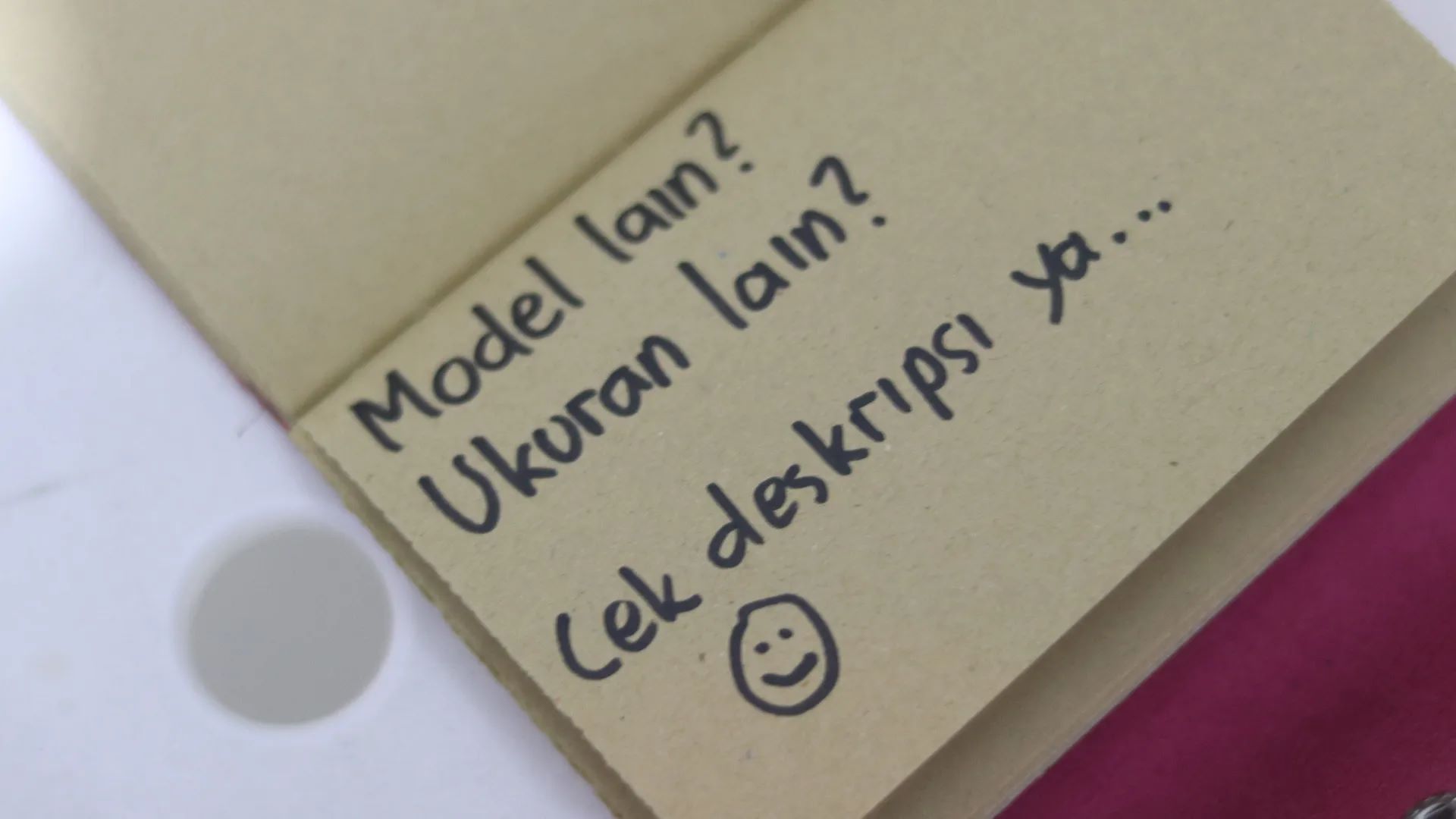

In the bustling workshop of Hibrkraft in Cileungsi, Bogor, every detail is a dialogue between the craftsman and the client. The image above—a handwritten note on a sample page asking, “Model lain? Ukuran lain? Cek deskripsi ya…” (“Other models? Other sizes? Check the description…”)—captures the essence of our philosophy. We are constantly customizing, adjusting, and fitting our work to the specific needs of the user. However, this image also speaks to a deeper truth about preservation: “One size fits all” is a dangerous fallacy when it comes to archival storage. Just as we tailor the journal to your brand, the storage enclosure must be tailored to the journal.
When we finish a production run of 2,000 custom leather journals, the air in our workshop smells of fresh adhesives, earthy leather, and clean paper. It is the scent of potential. But once those journals are packed and shipped, they enter a hostile world. The paper substrate, composed of delicate cellulose fibers, and the leather cover, a complex protein structure, are immediately under attack from their environment. The most insidious enemy is not fire or flood, but the very box they are stored in.
B2B buyers often focus entirely on the product quality—the grain of the leather, the weight of the paper—but neglect the “engineering of the enclosure.” If you place a masterpiece inside a coffin made of acidic cardboard, you are accelerating its death. At Hibrkraft, we believe that the manufacturing process does not end at the stitching table; it ends when the product is safely preserved in the hands of the final user. This article outlines the rigorous engineering standards required to keep that promise.
Archival Enclosure Engineering: Specifying Acid-Free and Buffered Storage Systems for White Label Leather Journals
From a material engineering perspective, the selection of storage furniture and enclosures is as critical to product longevity as the substrate itself. The technical phenomenon at play is “acid migration.” Acids are mobile molecules. If you store a pH-neutral Hibrkraft journal inside a standard, cheap corrugated cardboard box, the acids from the box (derived from wood pulp) will migrate into the journal. Over time, this causes the paper to yellow, become brittle, and lose its tensile strength.
For premium white label procurement, it is a technical requirement that all boxes, folders, envelopes, and sleeves be manufactured from materials that are strictly acid-free and lignin-free. These are not marketing buzzwords; they are chemical specifications.
1. Acid-Free (pH 7.0+): This indicates that the material has a pH of 7 or higher at the time of manufacture. However, “acid-free” alone is not enough, because materials can become acidic over time as they age.
2. Lignin-Free: Lignin is the organic polymer that acts as the “glue” in trees, binding wood fibers together. While essential for the tree, it is disastrous for paper. Lignin is unstable; it reacts with light and oxygen to produce acids and turn yellow (think of an old newspaper left in the sun). Standard cardboard is full of lignin. For archival storage, the enclosure material must have the lignin chemically removed.
The exclusion of lignin is vital because this organic polymer is a primary driver of structural embrittlement. In a tropical climate like Indonesia, where heat accelerates chemical reactions, lignin degradation happens faster. If your corporate gifts are stored in high-lignin boxes in a Jakarta warehouse, you might find that the white endpapers of the journals have developed “burn marks” where they touched the box walls after just six months.
| Enclosure Type | Chemical Composition | Mechanism of Failure | 10-Year Outcome |
|---|---|---|---|
| Standard Corrugated Box | High Lignin, Unbuffered Wood Pulp. | Acid Migration: Acids leach from box to journal. | Yellowing, brittleness, “cardboard odor” transfer. |
| Acid-Free (Unbuffered) | Lignin removed, pH Neutral. | Environmental Saturation: Absorbs external acids until saturated. | Moderate stability, but vulnerable to polluted air. |
| Archival Buffered Box | Lignin-Free + 3% Calcium Carbonate Reserve. | Neutralization: Actively fights acid formation. | Pristine Condition. |
As the table illustrates, the “Hibrkraft Standard” for long-term storage is the Archival Buffered Box. It is the only option that actively protects the asset rather than just holding it.

The Chemistry of Buffering: The Alkaline Reserve
A key engineering safeguard in these systems is the use of chemical buffers. While a paper substrate (like our Bookpaper 90gsm) may be manufactured to be pH-neutral, it remains technically vulnerable to external pollutants. Nitrogen dioxide and sulfur dioxide—common pollutants in urban air—can penetrate the storage box. Once inside, they react with moisture to form nitric and sulfuric acids within the paper. This shift turns a neutral material back into an acidic state.
Buffered enclosures provide a defense mechanism known as an “alkaline reserve.” Typically, this involves adding approximately 3% calcium carbonate (chalk) to the enclosure material during manufacturing. This alkali acts as a sacrificial agent. When acidic ions attack the box, they react with the calcium carbonate first, neutralizing the acid before it can reach the leather journal inside.
However, this is a finite resource. If the acid formed during natural aging or introduced via environmental exposure exceeds the enclosure’s specific buffering capacity, the internal contents will eventually deteriorate. This is why “air quality” and “enclosure quality” must work in tandem. You cannot rely on the buffer forever if the storage room is full of diesel fumes. For B2B clients storing inventory for annual gifting cycles, a buffered box essentially “pauses time” for the duration of storage, ensuring the leather smells fresh and the paper remains crisp upon unboxing.
The Core: Mechanical Fit and the “Trojan Horse” of Contaminants
To implement an effective storage strategy (the “How”), enclosures must be specified to fit the exact dimensions and shape of the leather journal. The handwritten note in the image asks, “Ukuran lain?” (Other sizes?). This is crucial. If you store an A5 journal in a box designed for A4, the journal will slide during handling. This kinetic energy causes abrasion on the leather corners (scuffing) and can loosen the binding structure if the book hits the box walls repeatedly. Conversely, a box that is too tight exerts compression forces that can crush the spine or permanently indentation the leather cover.
Technical handling protocols for custom leather goods necessitate the absolute avoidance of what we call “Trojan Horse contaminants.” These are items introduced into the storage environment that seem harmless but are chemically destructive.
1. Adhesive Tapes: Never use standard packing tape directly on the archival enclosure or the journal. The adhesive will dry, yellow, and “creep,” leaving sticky residue that is impossible to remove from leather without abrasion.
2. Metal Clips & Staples: In humid environments (like Indonesia), metal rusts. Rust is iron oxide, which is acidic and causes permanent orange staining on paper and leather. Even “stainless” steel can corrode under certain conditions.
3. Rubber Bands: This is the enemy of preservation. Rubber bands contain sulfur. As they degrade, they melt into a sticky black tar that eats into paper and destroys leather finishes. They also off-gas sulfur compounds that tarnish foil stamping.

“A journal is only as safe as its skin. If you wrap a premium leather book in a cheap acidic sleeve, you are essentially marinating it in slow poison.” – Head Craftsman, Hibrkraft
For delicate wrapping, procurement should specify tissue paper that is specially designed to be pH neutral or “Unbuffered Glassine.” Why unbuffered for the wrapping? Because while buffering is good for the box, direct contact with high-alkaline concentrations can sometimes react with specific protein structures in leather or certain photographic emulsions if the client inserts photos. A neutral, unbuffered tissue layer between the leather and the buffered box provides the perfect chemical gradient.
Consider the “Clip Test.” If you leave a paperclip on a document in your warehouse for six months, does it leave a mark? If yes, your humidity is too high, and your storage protocols are failing. At Hibrkraft, we ensure no metal touches the product unless it is the brass hardware we installed, which is lacquered or treated for resistance.
The Solution: Fire, Water, and Asset Resilience
Within the broader scope of asset preservation, storage furniture should ideally be fire-resistant and water-resistant to mitigate the risks of catastrophic environmental failure. Wooden shelving, while aesthetically pleasing, can be problematic. Wood off-gasses acetic acid and formic acid as it ages (the “new car smell” of wood is actually pollution to a book). Furthermore, wood absorbs water and burns easily. Powder-coated steel shelving is the archival standard. It is chemically inert, does not off-gas, and provides a non-flammable barrier.
By adhering to these rigorous enclosure standards, corporate buyers ensure that their documentation remains a permanent, high-value asset rather than a deteriorating liability. When your client receives a Hibrkraft White Label journal, they are judging your brand. If the box is yellowed and smells of vinegar, the perception of value drops. If the box is crisp, neutral, and protects the journal like a jewel, the perception of value soars.
We offer a replacement policy for manufacturing defects, but we cannot replace inventory lost to “Acid Migration” caused by poor warehousing. This guide is our attempt to protect your investment. We want your 1,000th unit to look exactly as pristine as the sample we sent you during the design phase.

Why Partner with Hibrkraft?
At Hibrkraft, we understand that we are a link in a long chain. We are a team of ~9 skilled craftsmen in Cileungsi, Bogor, producing up to 2,000 units a month. We define ourselves by “Handcraft at Scale.” This means we have the capacity to supply large B2B orders, but the soul to care about the microscopic details of preservation.
Our White Label service allows you to present a product that is entirely yours, but backed by our technical expertise. We source materials from the best tanneries in Indonesia (Magelang, Garut, Malang) and use papers tested for durability. When we ship to you via DHL Express, whether you are in Canada, Germany, or the UAE, we package with the journey in mind.
But we also empower you. We don’t just sell you a journal; we educate you on how to keep it alive. Partnering with Hibrkraft means partnering with a team that reads the chemistry textbooks so you don’t have to. We ensure that the product you sell is built to last, provided you give it the home it deserves.
Ready to start? Message us on WhatsApp at 0815 1119 0336 to discuss your bulk order and enclosure specifications. Click here to chat.
Sources & References
- Berisford, K. M. (2024). Acid-Free vs Archival: What You Need to Know About Paper Quality for Your Art.
- Chiles, J. (2024). What Is Pull Up Leather? – An In-Depth Look.
- StepbyStepArt (2025). Comments on Acid-Free vs Archival.
Disclaimer: this post are written in english to reach more audience.